A Chevron Quilt

DSC_0502

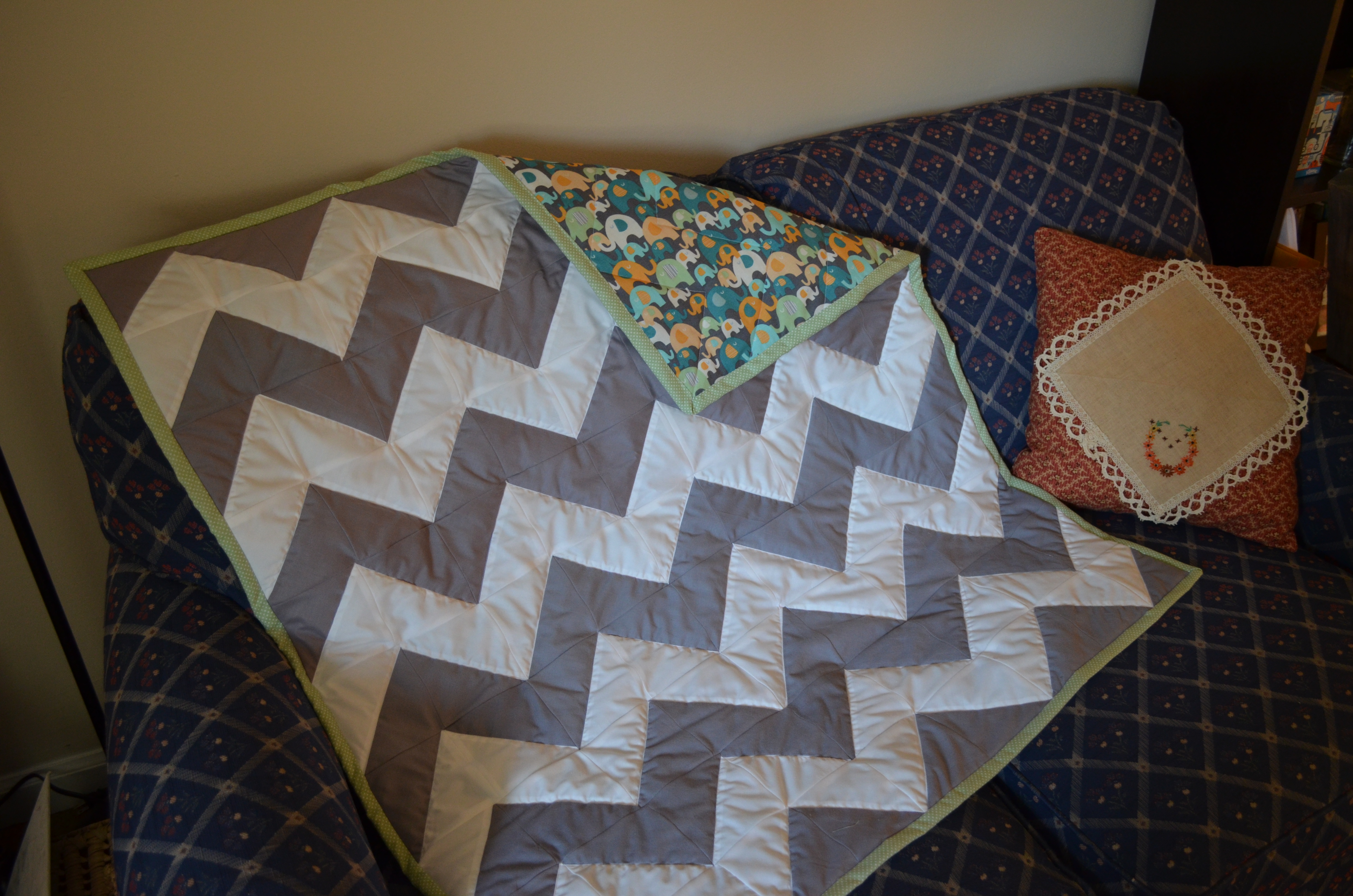
Several months ago, I pinned a chevon quilt on Pinterest with the intent of making it. But as the months past, the idea never came to fruition. That is, until I started to think about what I wanted to make for a friend whose baby is due at the beginning of October. I knew it was a design she would adore, and I am excited to say, it’s a design that is super easy to make.

DSC_0422

The entire quilt is made of these squares. For my quilt that was 36 inches x 40 inches, I used 90 of them.
DSC_0413

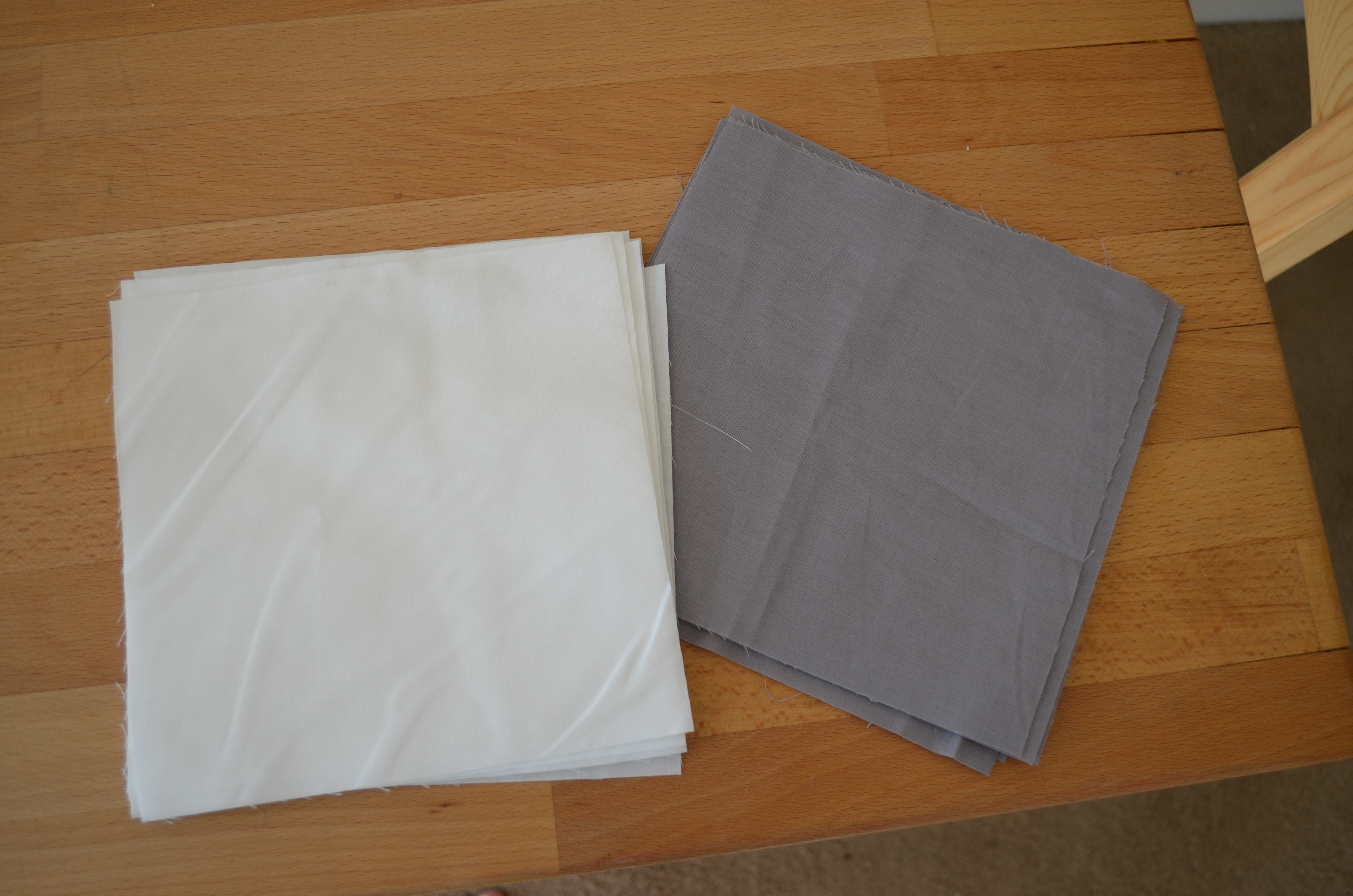
The process of making these squares is a trick that  all beginning quilters should learn. Once made, these squares can be arranged in several different patterns, including a pinwheel. The first step is cutting out 7×7-inch squares of both the white and grey fabric.
DSC_0414

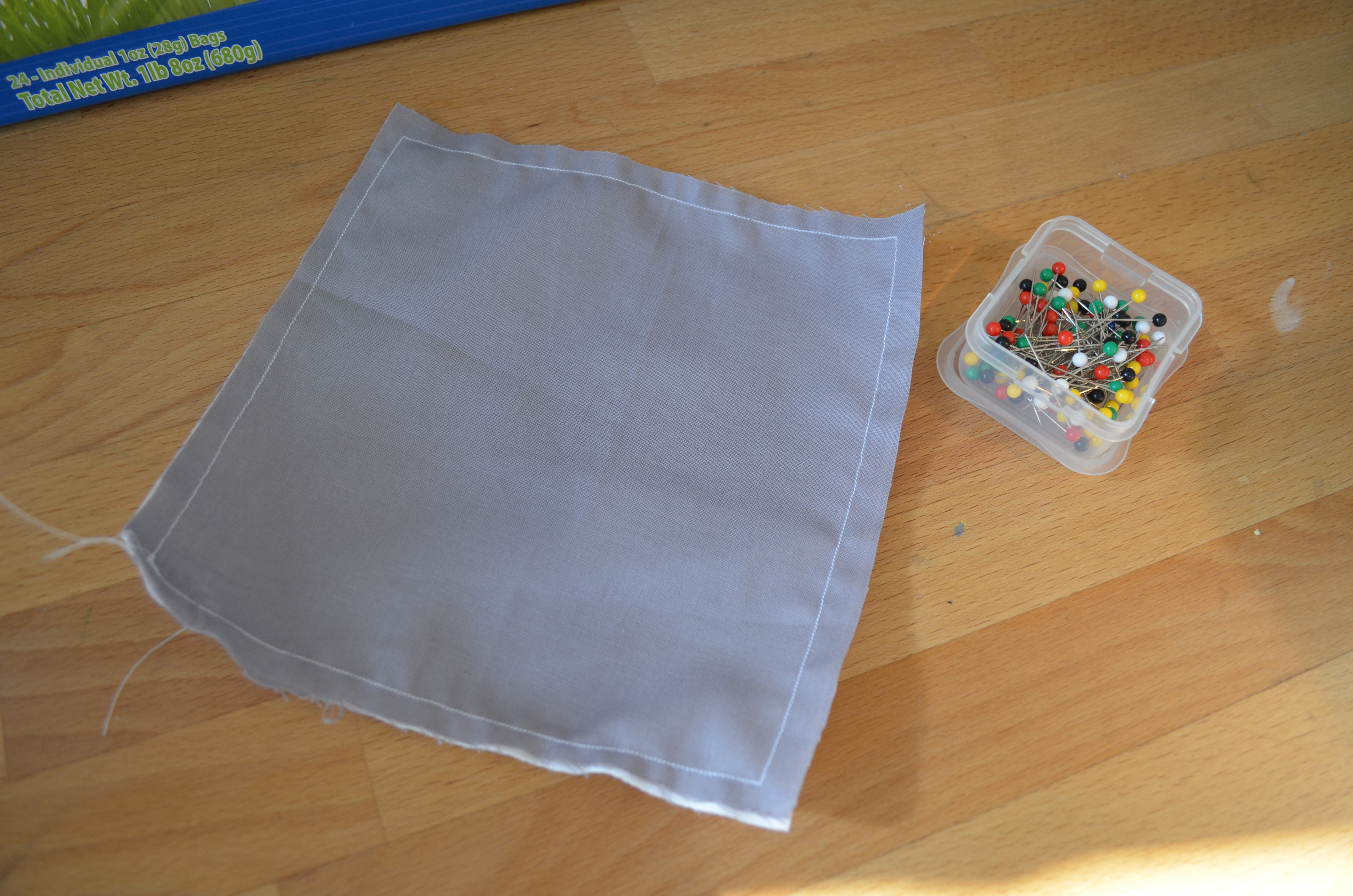
Next, I  layer a square of the grey fabric on top of one of the white and sew a border, using a 1/4 inch seam allowance.
DSC_0418

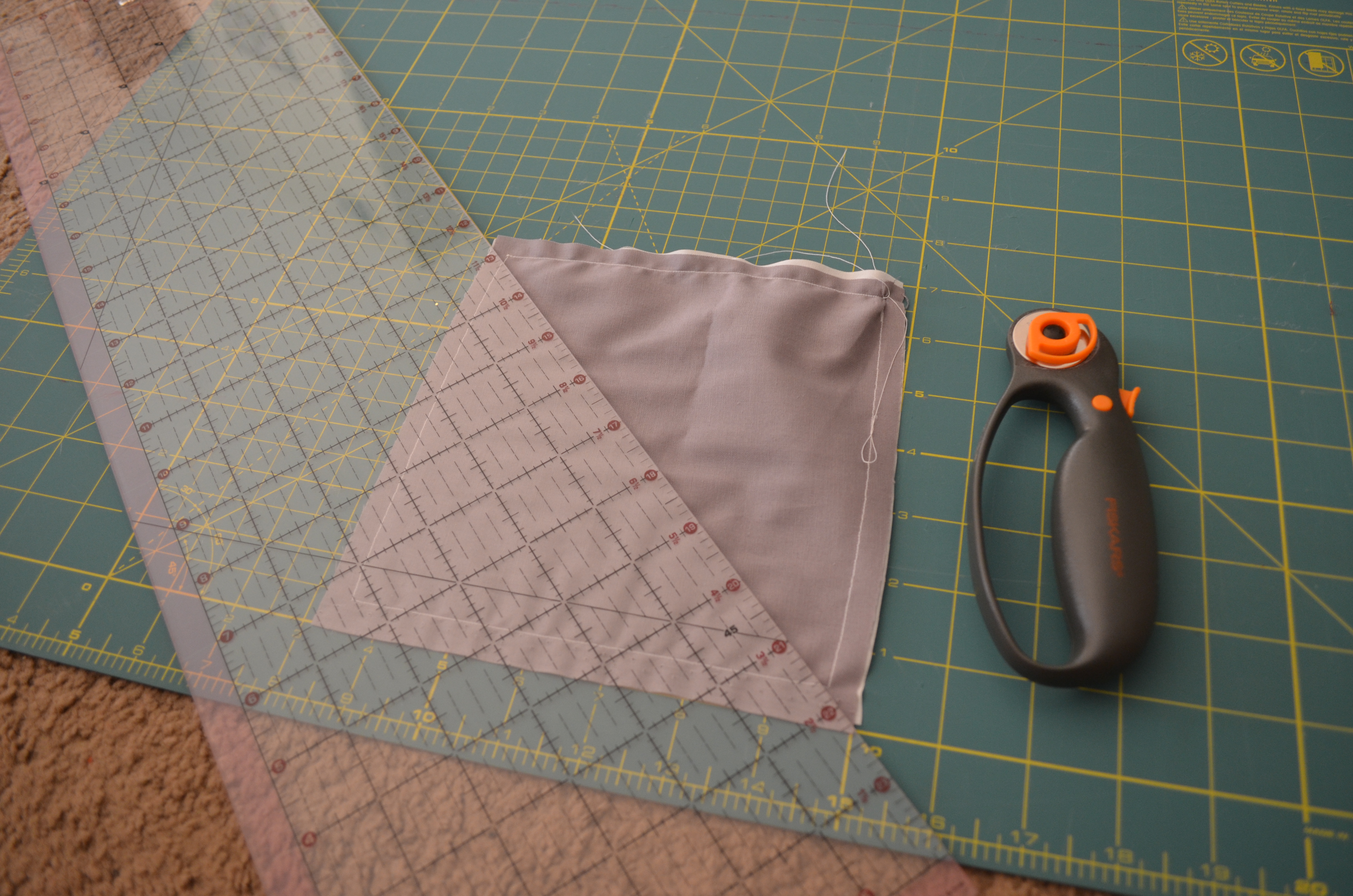
I then cut the square in half, diagonally. I repeat this step with the two triangles I just created.

DSC_0419

To finish, I unfolded the triangles and ironed the seams. I also cut off the extra fabric at the corners. As you can see, one 7-inch square quickly creates 4 smaller squares. Once you get the hang of it, you’ll find you have 90 squares before you know it.
DSC_0477

DSC_0478

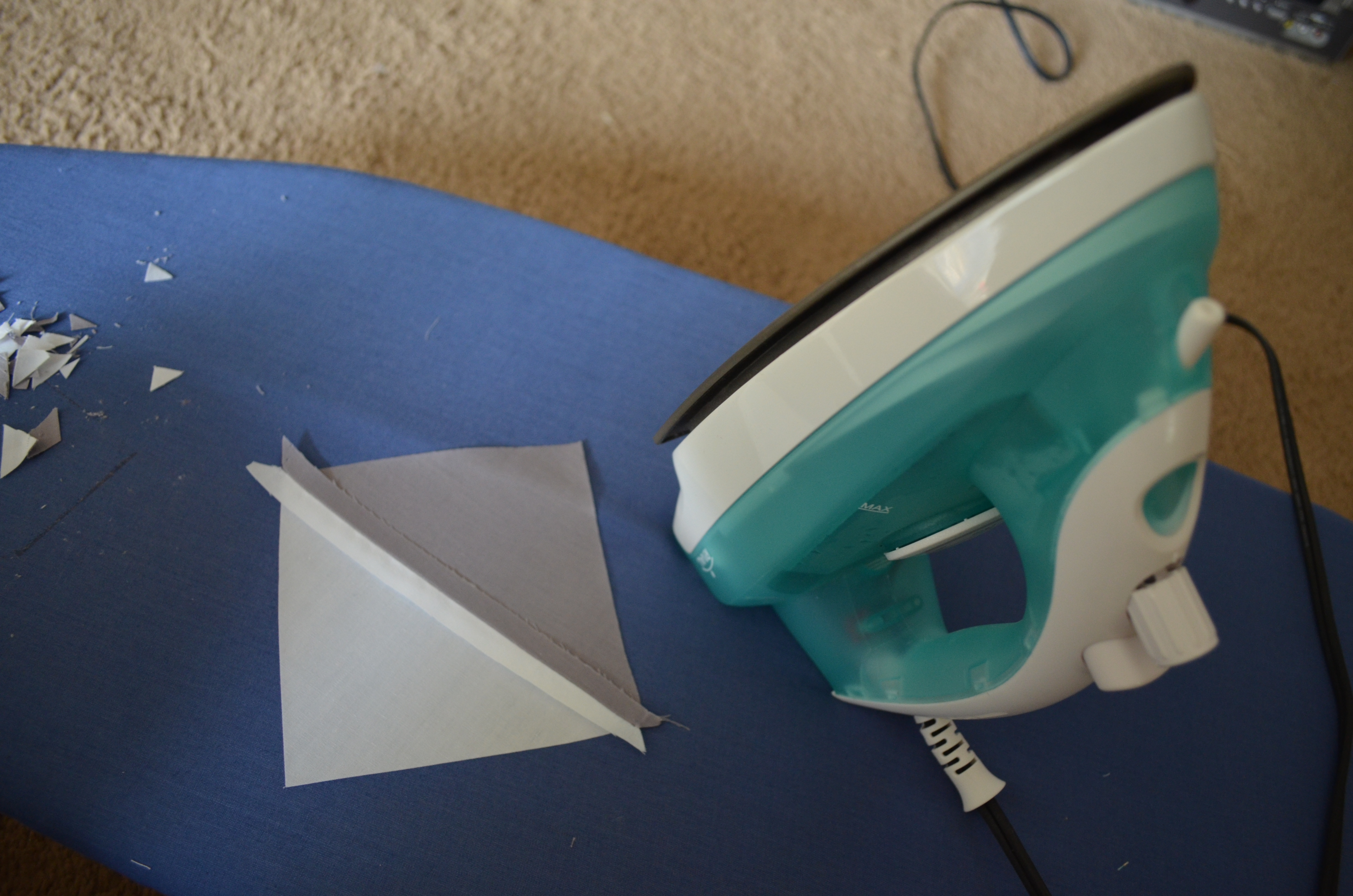
Once you have made all of the squares, you simple have to sew them together. My quilt was 10 rows of 9 squares each. You arrange the squares so the same colors are always touching.

DSC_0482

Since we’re dealing with squares, it means we’re exclusively dealing with straight lines. So once you create the rows of 9 squares, all you have to do is sew the rows together.
DSC_0484

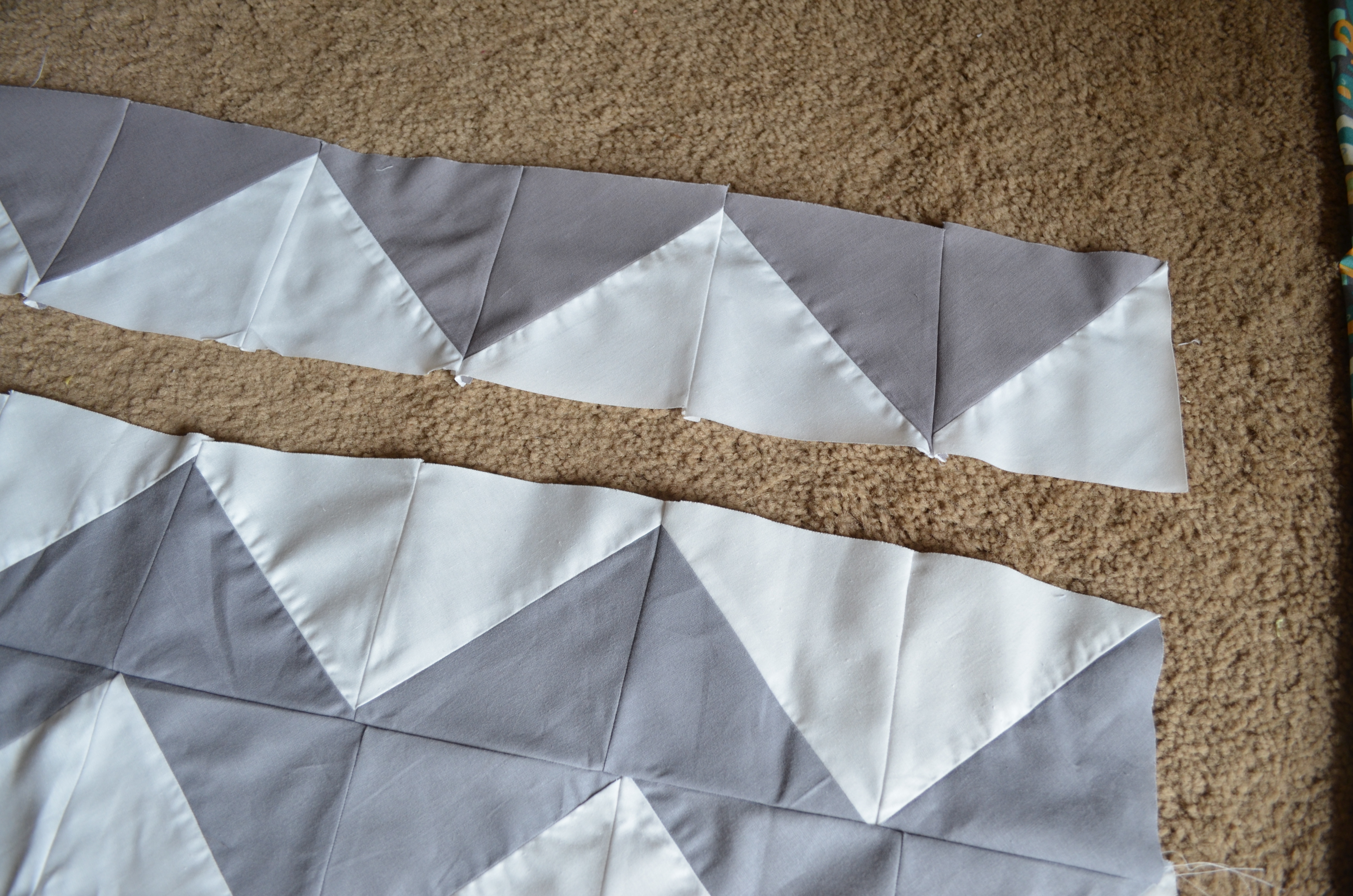
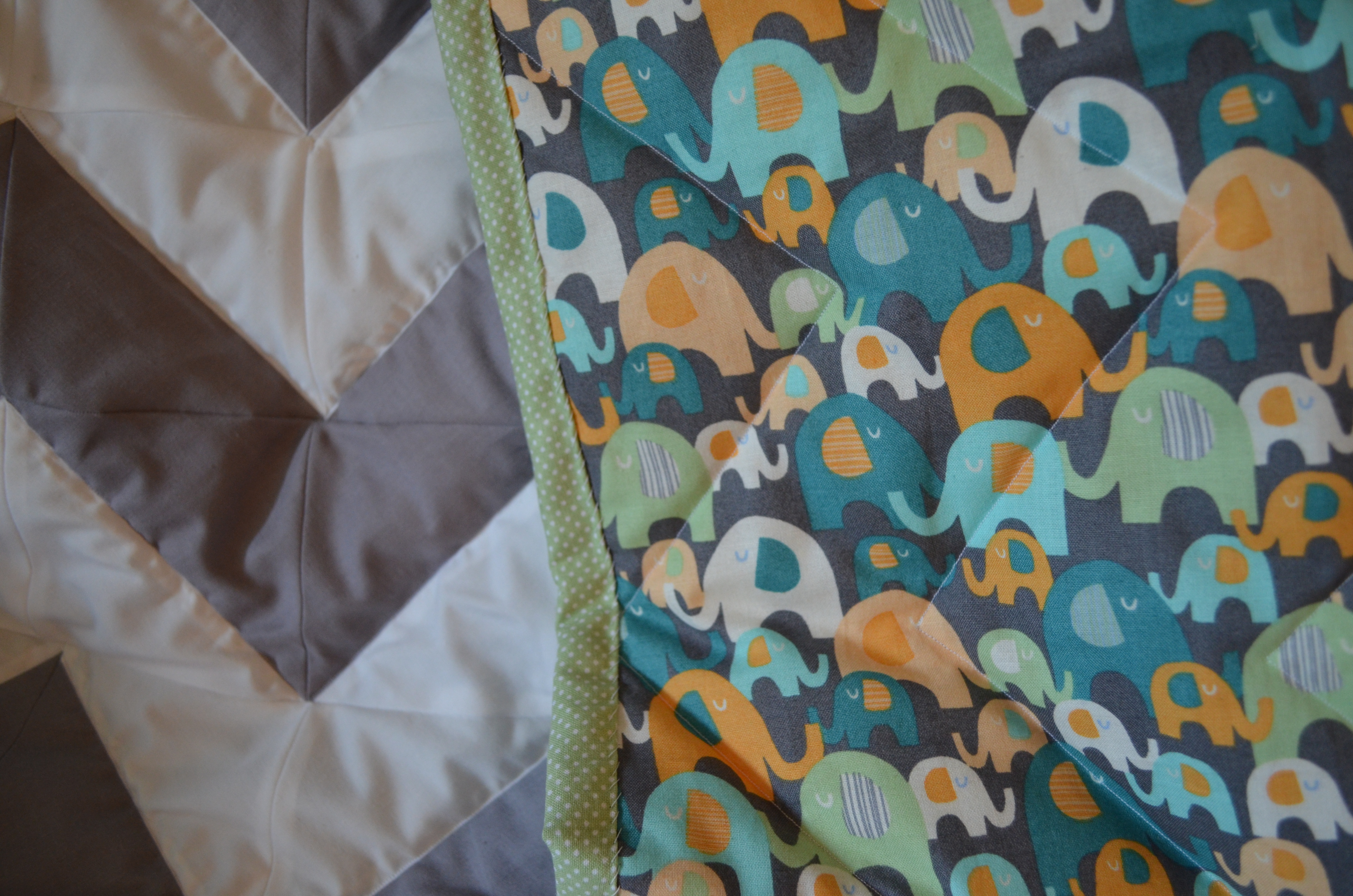
To accompany the chevon design on the front of the quilt, I used a yard of an adorable elephant pattern for the back that matches perfectly (if I do say so myself).

DSC_0488

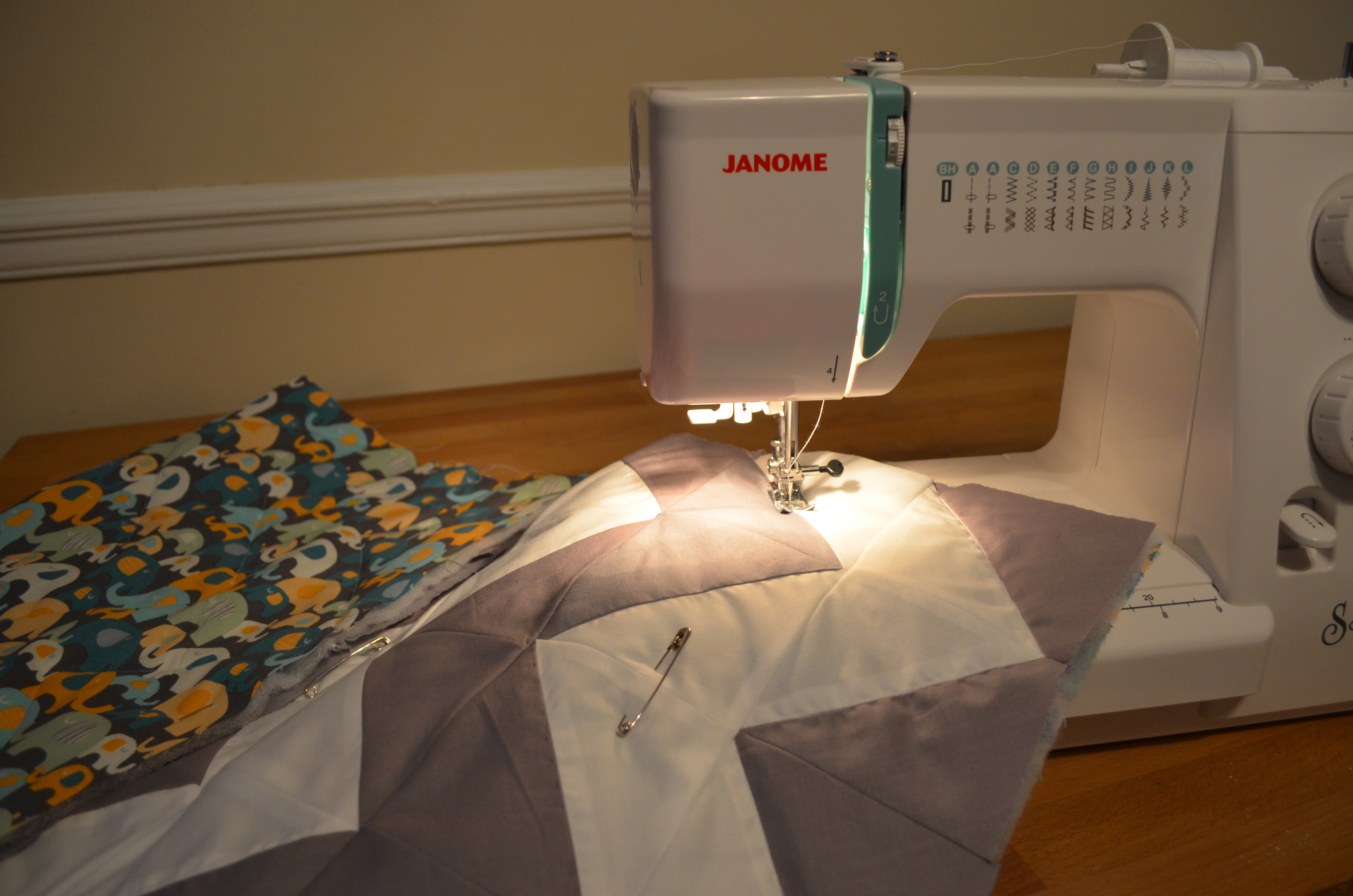
Once I basted both sides of the fabric to the polyester batting I purchased, I simply quilted along the chevron pattern.
DSC_0492

For the binding, I chose a green fabric that matches one of the elephants on the back. I cut the fabric into 2.5 inch stripes, sewing them together to have enough to fit the diameter of the quilt. I next ironed down a half inch of one side of the fabric.

DSC_0494

I sewed the binding to the quilt, using a 0.5 inch seam, using my short cut you can read about here for the corners.

DSC_0496

Now that I have made a handful of quilts, I wanted to create a tag that would start to mark them as mine. But for this quilt, I didn’t want to use my initials since I am making the quilt for a friend, so I decided to use the year – the year her baby would be born.

DSC_0504

I couldn’t be more happy with the final result. Of course, the quilt contains a few mistakes (if you look closely, you’ll notice I accidentally purchased two different colors of grey fabric). But with such an easy first-time experience,  I know I will make another chevron quilt in the near future. And coincidentally, when I gave the quilt to my friend, I found out the chevron and the elephants match her nursery perfect. I guess you could just say I am very on top of the current trends!
DSC_0503

DSC_0505

Quilting with Moroccan Fabric

IMG_2475

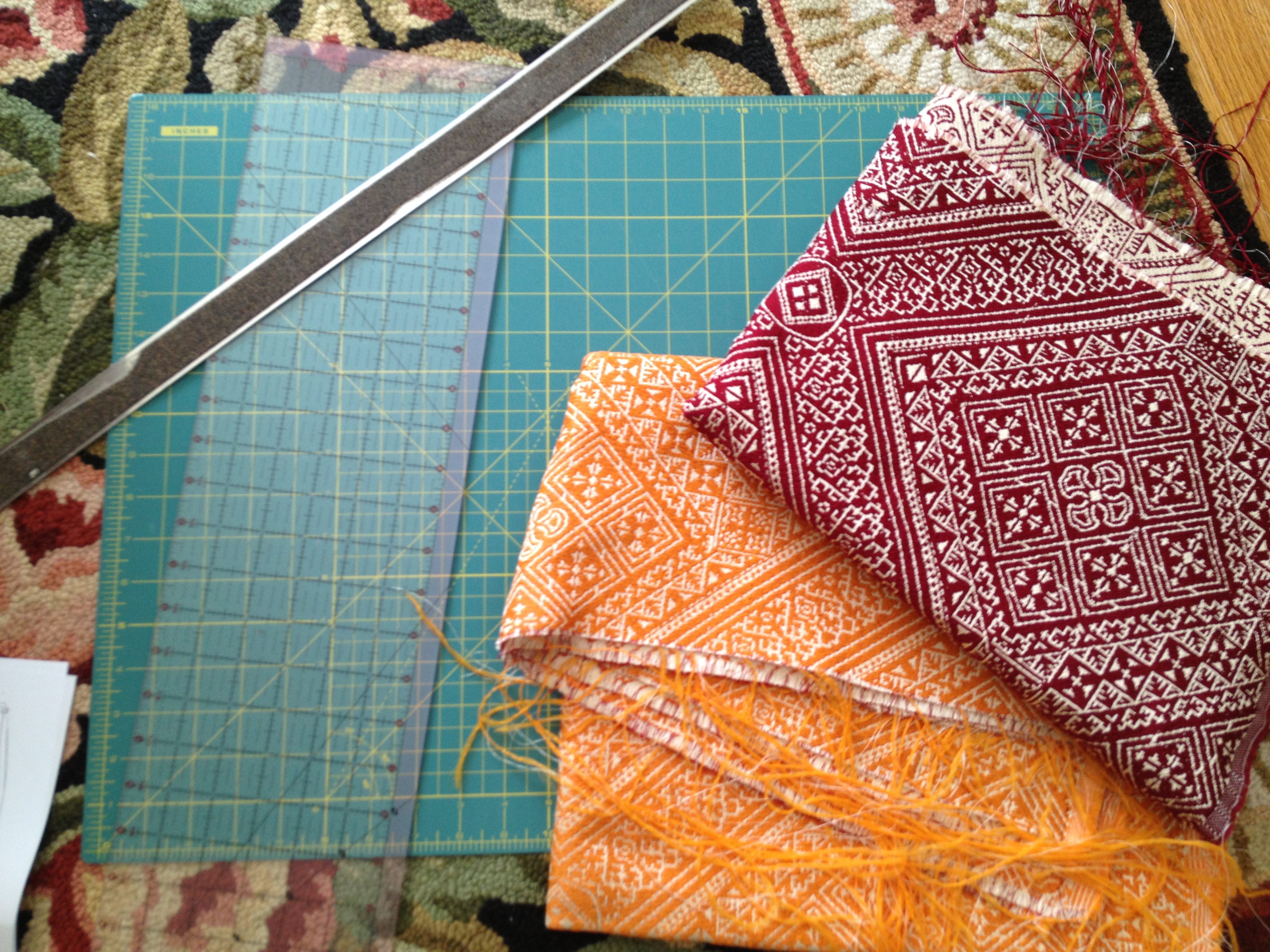
Having traveled to the cold land of the hot sun –  aka Moracco – twice now, I have found myself with several meters of fabric that are calling to be used. On my second trip to North Africa, I purposely bought a meter of a different color of the same fabric with the idea of making a quilt. With such beautiful fabric, I wanted to keep the quilt simple, so I mapped out a basic square pattern – one that could easily be used to make a t-shirt quilt.

IMG_2812

You can see the dimensions I worked with in the picture above. The squares were 11.5 x 11.5 inches, and I used a 0.5 inch seam allowance.

IMG_2509

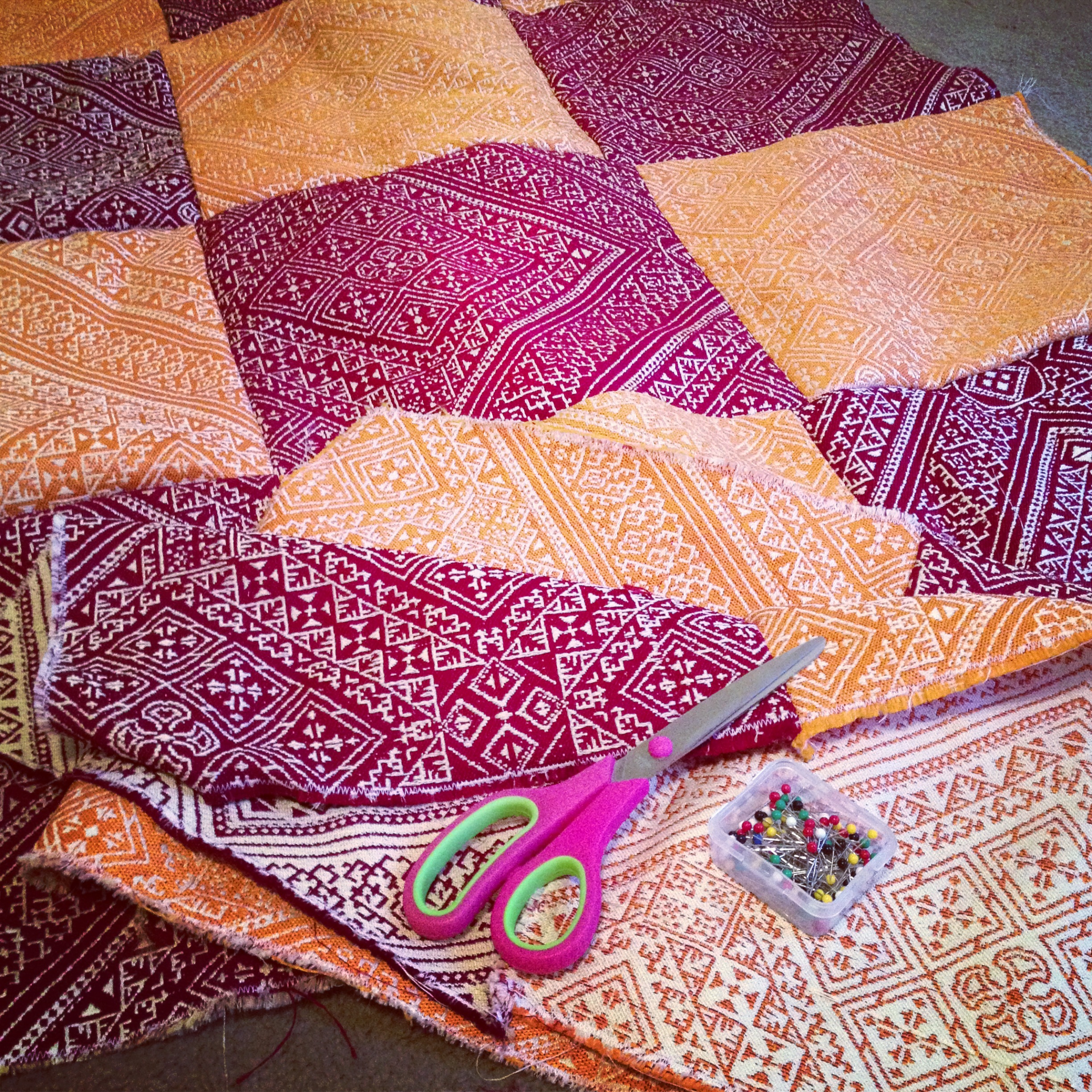
Since I was working with woven fabric, I prevented frayed edges by using the basic zigzag stitch to act like an overlocking stitch. It  was a tedious process, but completely necessary. Fabric can still fray even after you stitch the pieces together.

IMG_2801

Once I finished the edges, it was a quick process to sew all of the individual squares into the rows and then the rows into a quilt. Again, I used a 0.5 inch seam allowance throughout.

IMG_2807

With the middle squares in place, I used a off-white canvas fabric to act as a margin of color – another simple touch to highlight the beauty of the fabric. The strips were 7 inches wide. I used the canvas fabric to match the thickness of the Morroccan fabric, but for the back fabric and binding, I used cotton. To see how I bind quilts, you can visit my previous post on the matter.

_DSC0061

I couldn’t be more happy with the finished product. It achieved the goal that I wanted – something that could show off the beautiful, hand-woven fabric as well as encapsulate my memories of purchasing the fabric on my travels. You just can’t find fabric like this here in America – well, as least not for the price that I paid for them.

_DSC0064

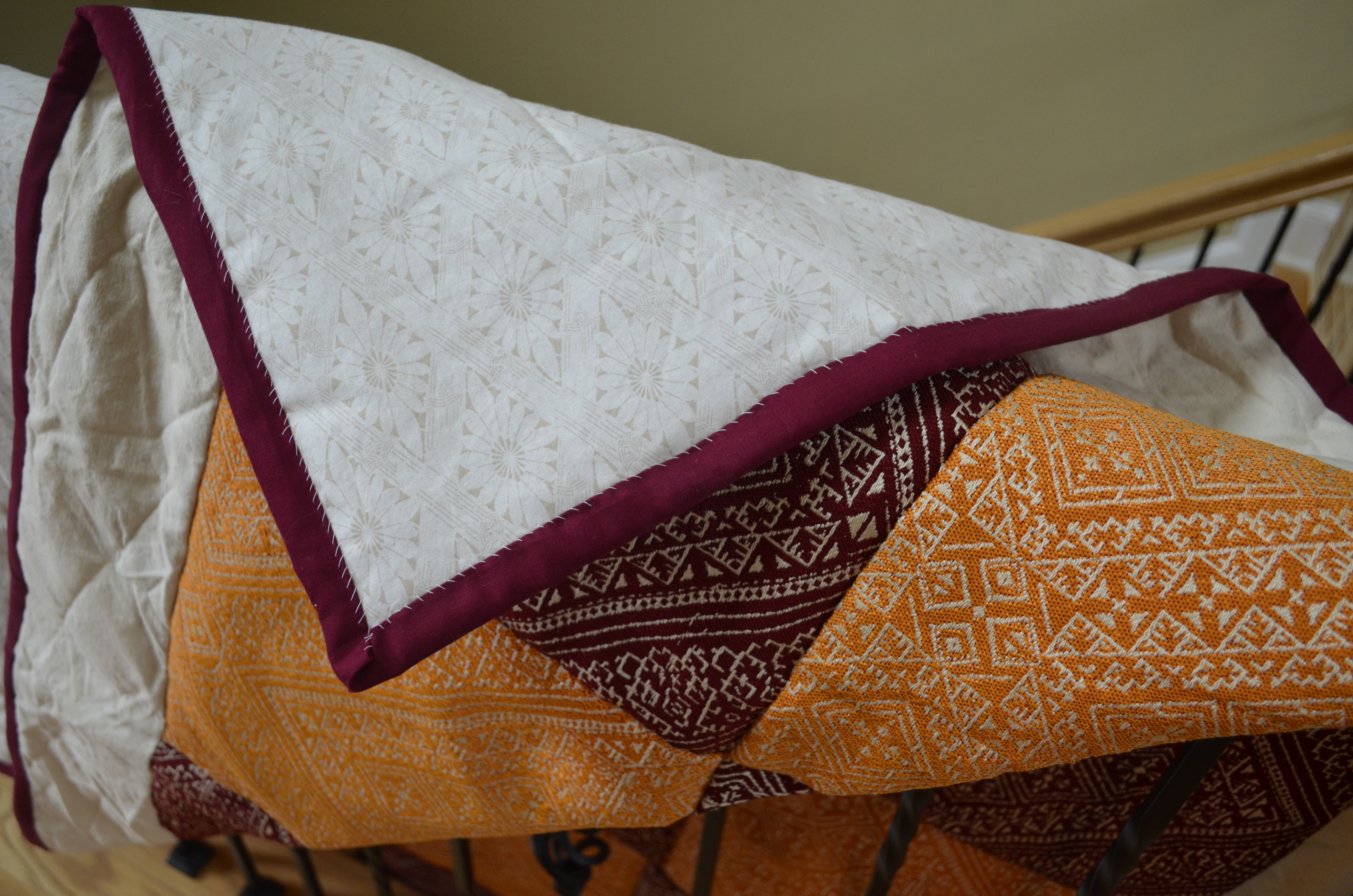
I found the fabric for the back side of the quilt at Handcock Fabrics, and it worked perfectly.  For the back side, I think the fabric needs to be simple enough to not trump the front, but interesting enough to add to the overall look of the quilt. This fabric did just that.

_DSC0073

This pattern is easy and simple to recreate since pieces are large, and you work with straight lines. Please feel free to ask any questions you have; I would love to help you as you work to create a quilt for yourself.

A Stately Touch

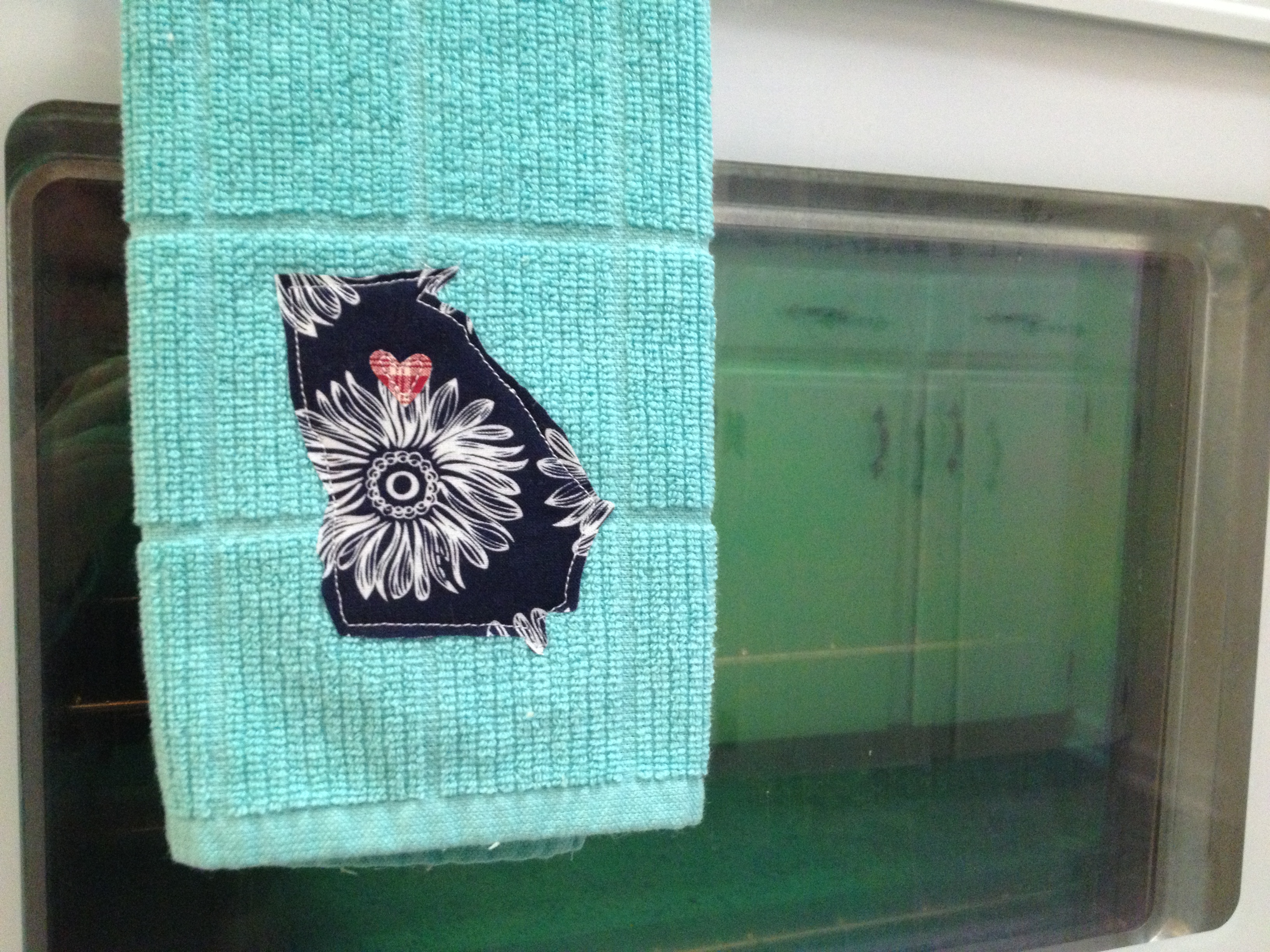
IMG_2138As a gift for a friend who lives abroad, I made her some customized tea towels that would help remind her of home. The project is simple and cheap to make. I purchased the towels at Target for less than $3, and I used scrap fabric and Heat n’ Bond adhesive to make the appliqué.

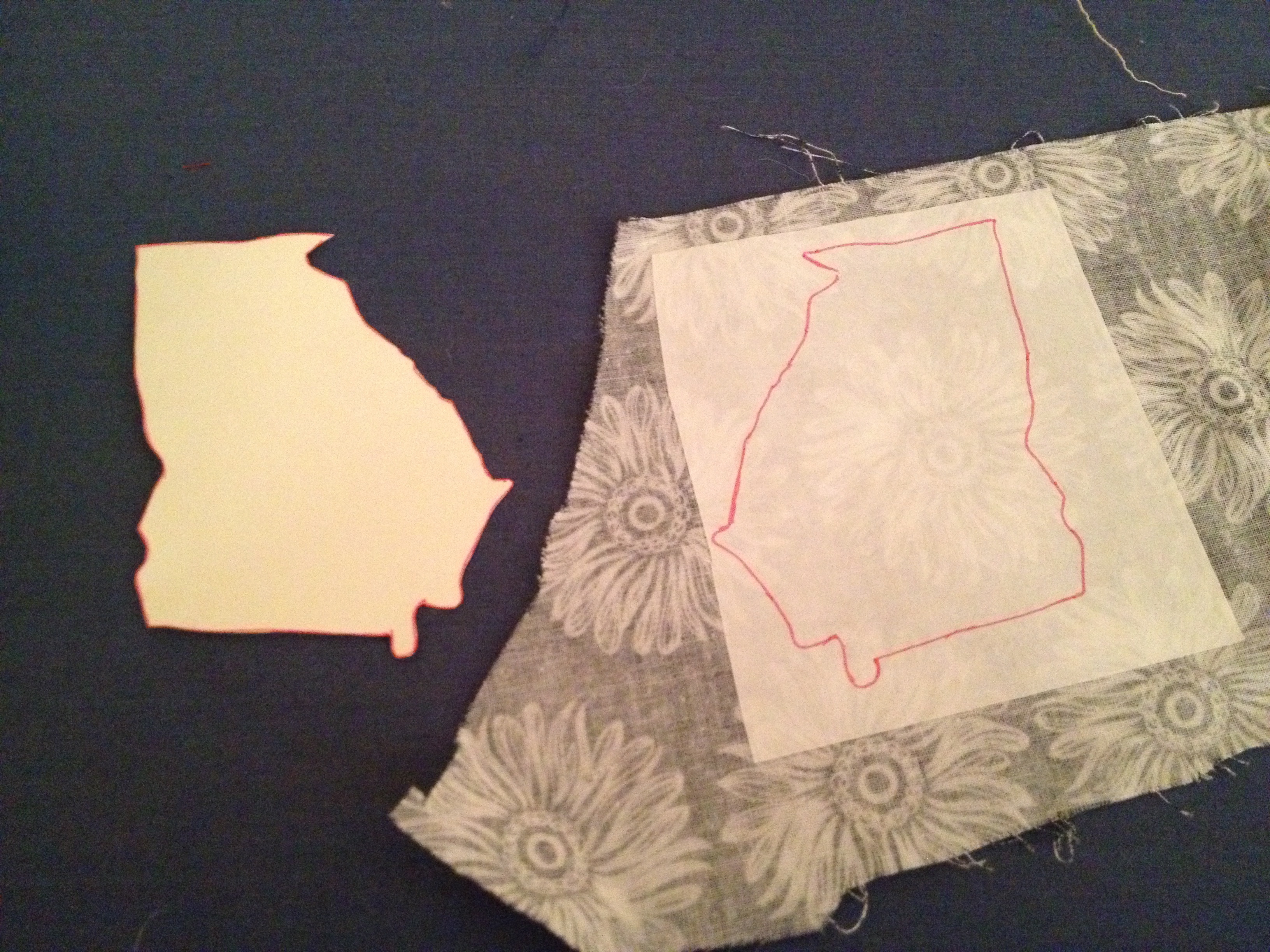
IMG_2135To use the Heat n’ Bond, I traced my chosen state (Georgia) off my iPad. I then traced the reverse image on the back side of the Heat n’ Bond paper. Using an iron, I attached the paper and then cut out the shape. I then ironed on the fabric to the towel and used my sewing machine to secure it in place.

IMG_2140

And then, because it is so darn trendy, I added a small heart. (Don’t we always say, the home is where the heart is?) I also made a towel for the country she currently lives in.

Voila – a simple, easy gift for a new home.


DIY Cloth Books

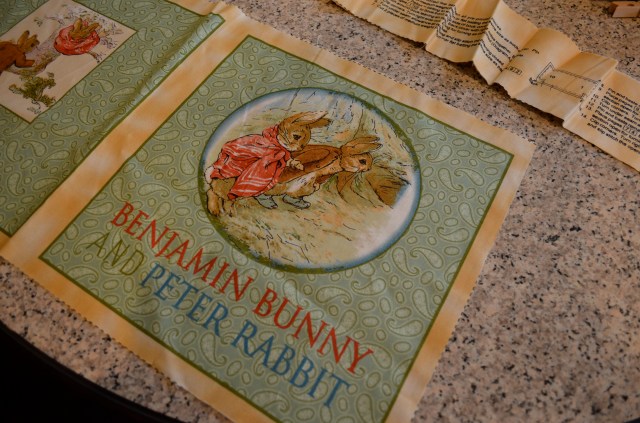
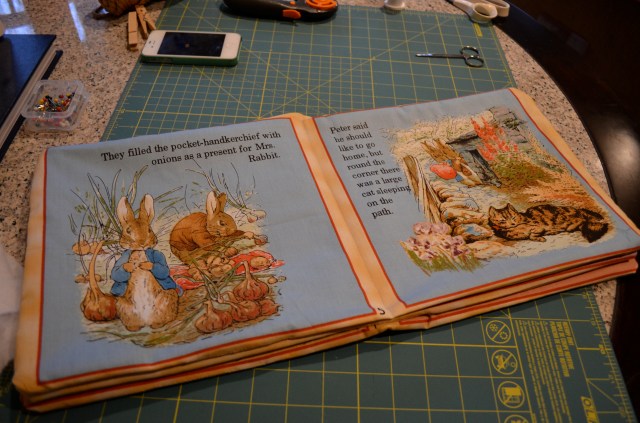
I have dedicated the month of January to finishing the project I have purchased materials for. Two summers ago, my grandparents took my cousin and I to Amish country in Ohio. In an adorable quilt shop, I found this fabric that had a tutorial to make a cloth children’s book. Naturally, I purchased a fabric set of Benjamin Bunny and Peter Rabbit.

DSC_0298

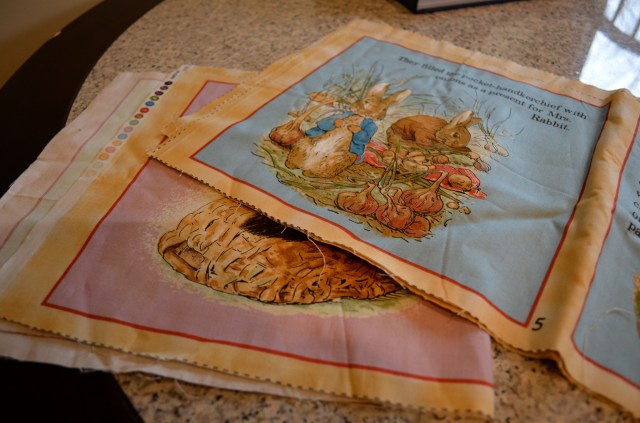
Now, I wish I purchased 3 more sets of fabric. The pages were laid out over a yard of fabric. Where I needed to cut was marked by dotted lines, and the instructions were listed at the bottom.

DSC_0293

DSC_0295

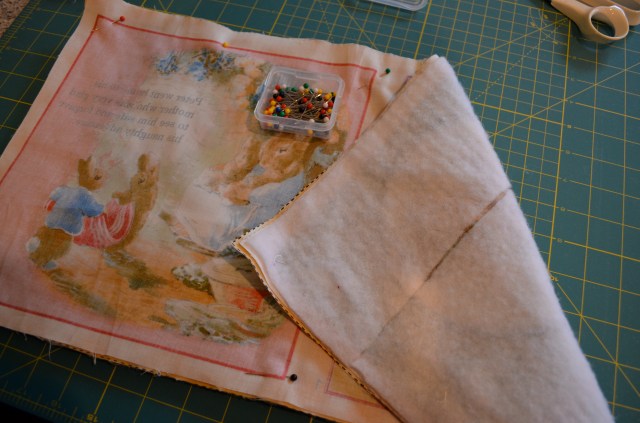
The book is made up of three sets of two panels each. To make a page, I basted a layer of filling (cut to the same size of the panel) to the wrong side of one of the panels. Then pin the corresponding panel to the other – right sides together. I used a 1/4 inch sewing allowance, leaving space to flip the book right-side-out. To finish, whipstitch the hole together, and press with an iron.

DSC_0299

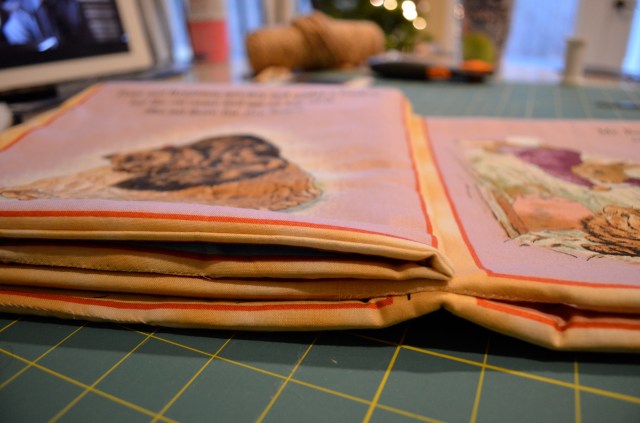
Repeat this with the next 2 pages. Once the three pages are finished, simply layer then in order, with the cover on the bottom, and sew a seam down the middle of the book. And that’s it – you have yourself a book.

DSC_0301

My book is not perfect, which I love. It is definitely homemade!

DSC_0306

DSC_0311

DSC_0314

A World View

DSC_0338

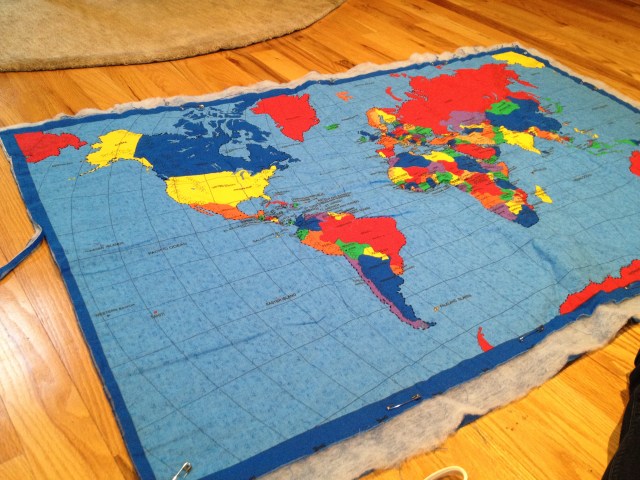
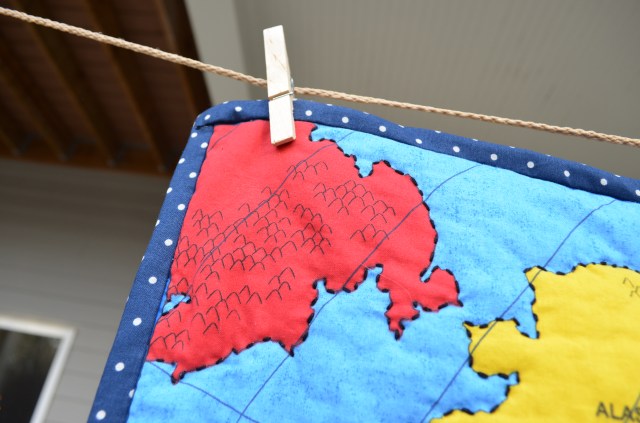
Another quilt, another day. My mother purchased this fabric for me months ago, asking me to make a quilt for her. At the time, we just had heard the news of our my coming nephew, and I was all into quilt making! Little did I know it would take me forever to finish it (mainly because my crafting leave-of-absence over the summer.)

I started with the fabric. The map piece was a yard, so I purchased a coordinating yard of fabric for the back. Basting it together with a layer of batting, I purchased a ton of black embroidery floss for the next step: quilting.

DSC03323

DSC_0343

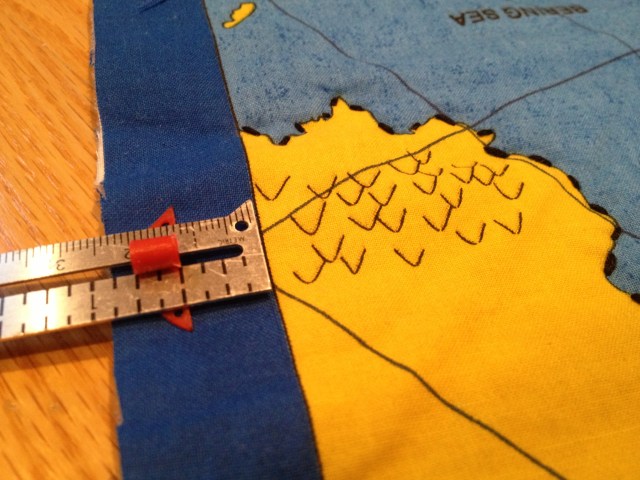
I traced each contient. Europe would have killed me if I traced each country. And I will tell you this, the process takes a long time (as hand-sewing does), but I think it is totally worth it.

DSC_0331

I did not hide the knots on the back, My initial thought was the quilt would be cute hung on the wall, so hiding the knots wouldn’t matter. By now I wish I took the extra time and did it anyways.

IMG_1875

IMG_1876

Once I finished quilting, I cut down the border to prepare for the binding. I only wanted an 1/2 inch edge.

DSC_0339

For the binding, I cut 2-inch wide strips. See how I finish quilts here.

From Napkins to Pillows

Everyone brings an unique perspective to an antique shop. My roommate has an eye for furniture. Another friends has a thing for vintage jewelry. I tend to fall in love with fabric. The other day I was wandering through the rows at an antique store in Homewood, and a set of napkins caught my eye. Naturally, I bought them and a matching handkerchief nearby.

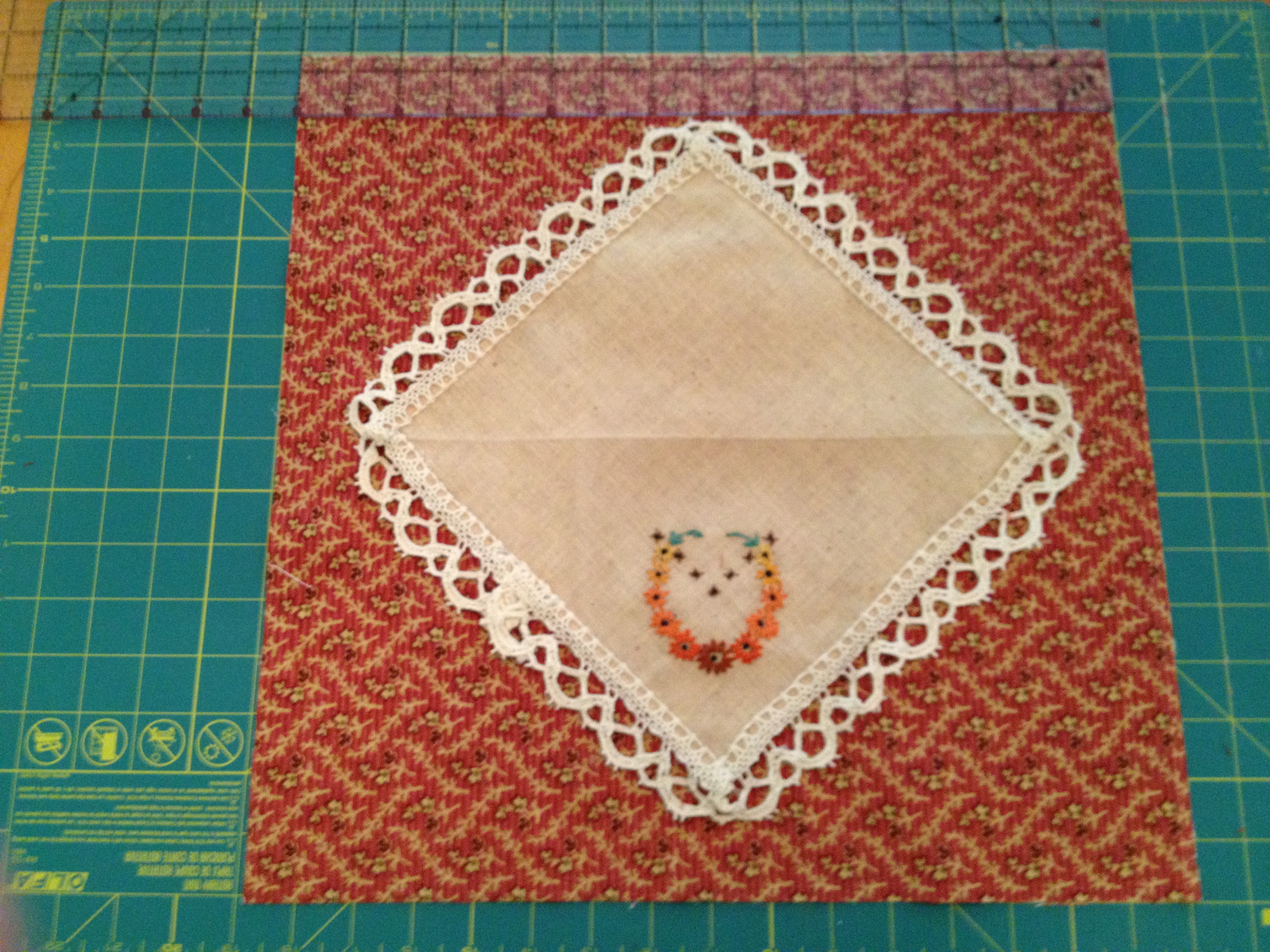
Once I took out the napkins’ seams, I cut them into perfect squares. When removing the seams, I usually lose fabric due to unraveling. I decided to not work with a pillow form, which meant I could make the pillow any size I wanted.

I ironed out the handkerchief, and pinned it in place on my designated “front” side of the pillow. With the lace edges, I didn’t want to compromise the look by using my sewing machine, so I hand-stitched the handkerchief to the napkin.

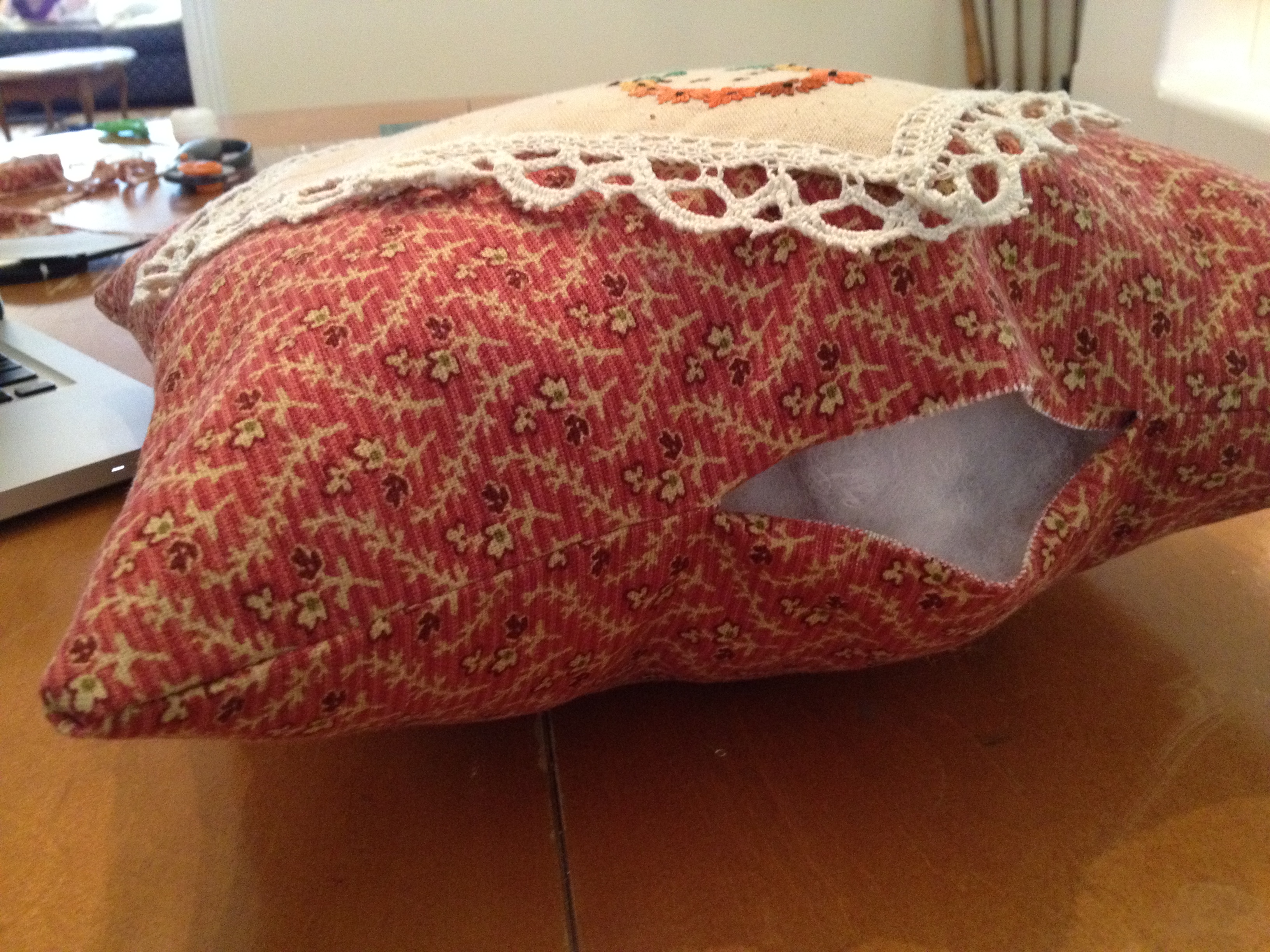
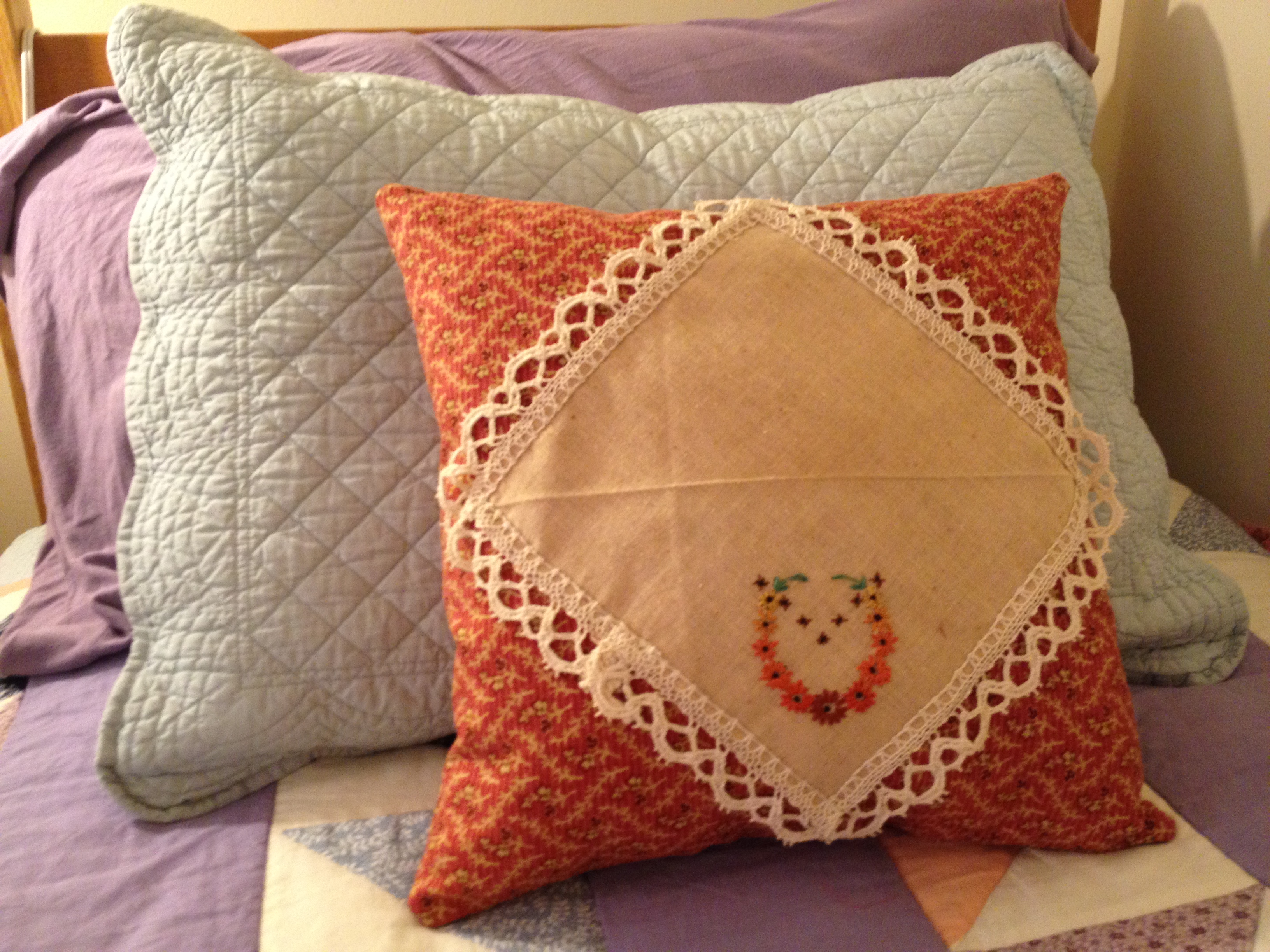
Once the handkerchief is sewed down, time to make the finishing touches. Take the two napkins and put the two “right” sides together. I used a 1/2 inch seam, leaving a small hole to stuff the pillow. Once the pillow was full, I hand-stitched the hole closed.

Super easy and quick to make.

Oh Baby (Quilt)

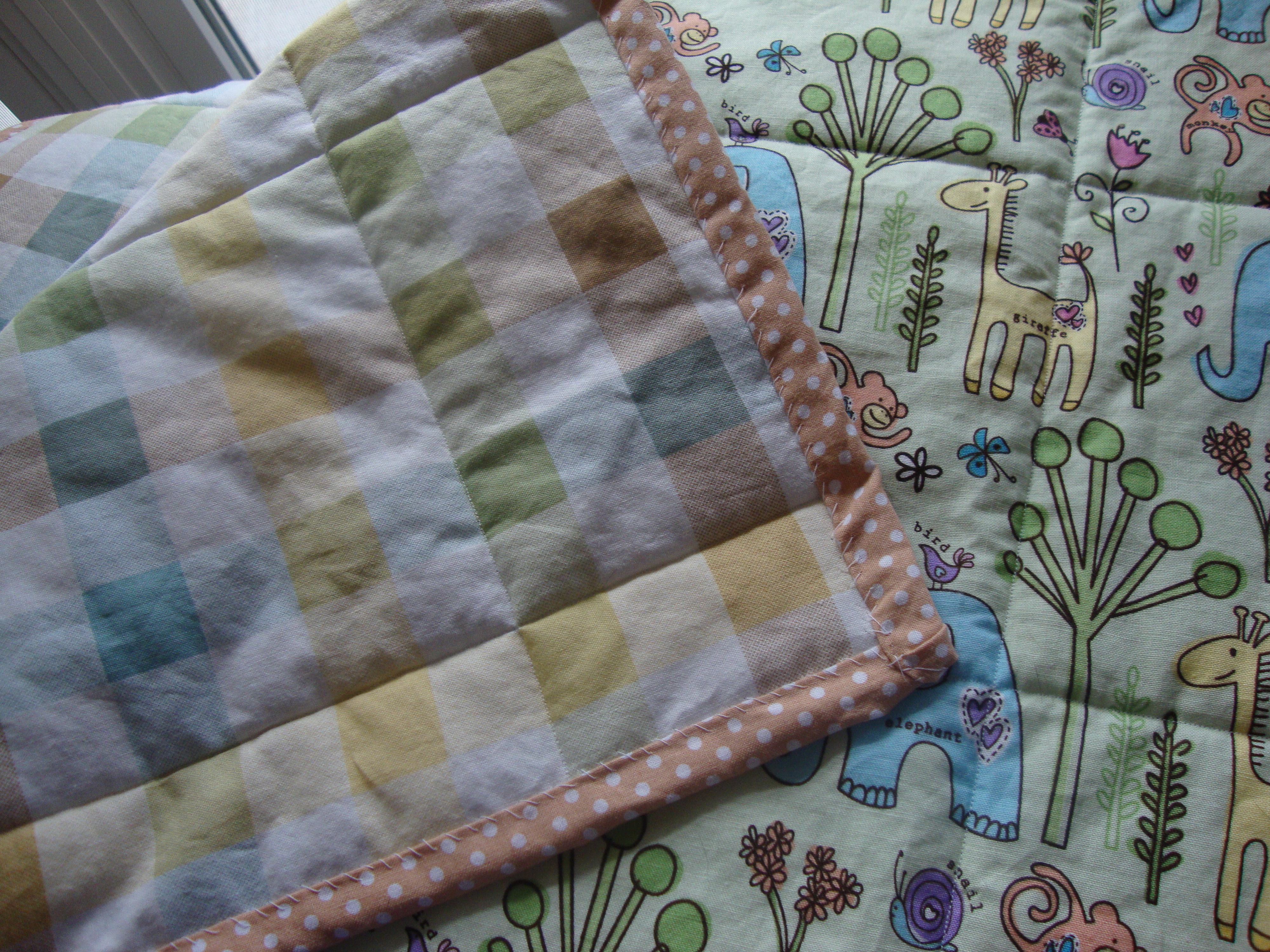
The day after my brother and sister-in-law announced they were expecting, I found myself in a fabric store freaking out over all the adorable baby patterns. I saw this fabric and knew I had to do something with it. Let’s face it, a baby opens up a whole new genre of crafts that can be made, and I am so ready to embrace it.

Naturally, the first thing that came to my mind was a quilt. So I bought a yard of this fabric, a yard of this amazing plaid fabric (that matched perfectly, I might add), and 4 inches of an orange polka dot fabric (that matched the monkey) for the binding.

To assemble the quilt, I decided to not cut up the fabric but keep the pieces whole. This made it super easy and super fast to make. I used the adhesive spray to stick the fabrics to the batting, and then I simply quilted boxes using the plaid side as my guide.

Finally, I attached the binding (see instructions on earlier posts). I was able to make the quilt in less than a day, and it might be the most adorable thing I have ever made.

I can’t wait for the newest member of this family to get here, but in the mean time, I’m sure there are many crafts I can make until then.

50 Nifty United States

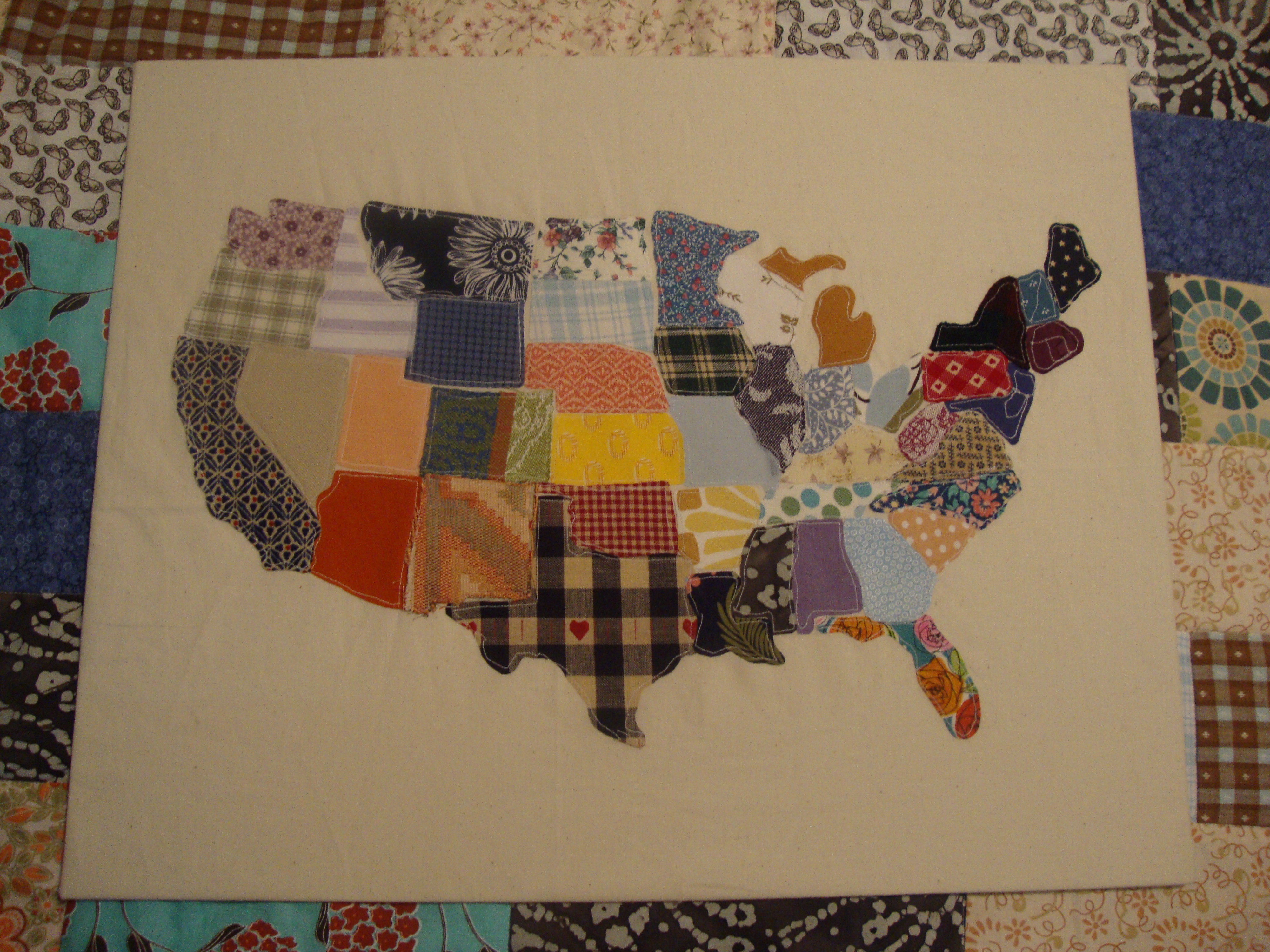
I am a big fan of Pinterest because it opens the door to many craft blogs I would never have found on my own. This project is the first one I have completely copied from the website. I figure if it ain’t broke, don’t fix it! Plus, I’m always a sucker for a good map.

Thanks to a box of fabric so lovingly given to me by my aunt and old puzzle from my childhood, this project is super easy and super cheep!

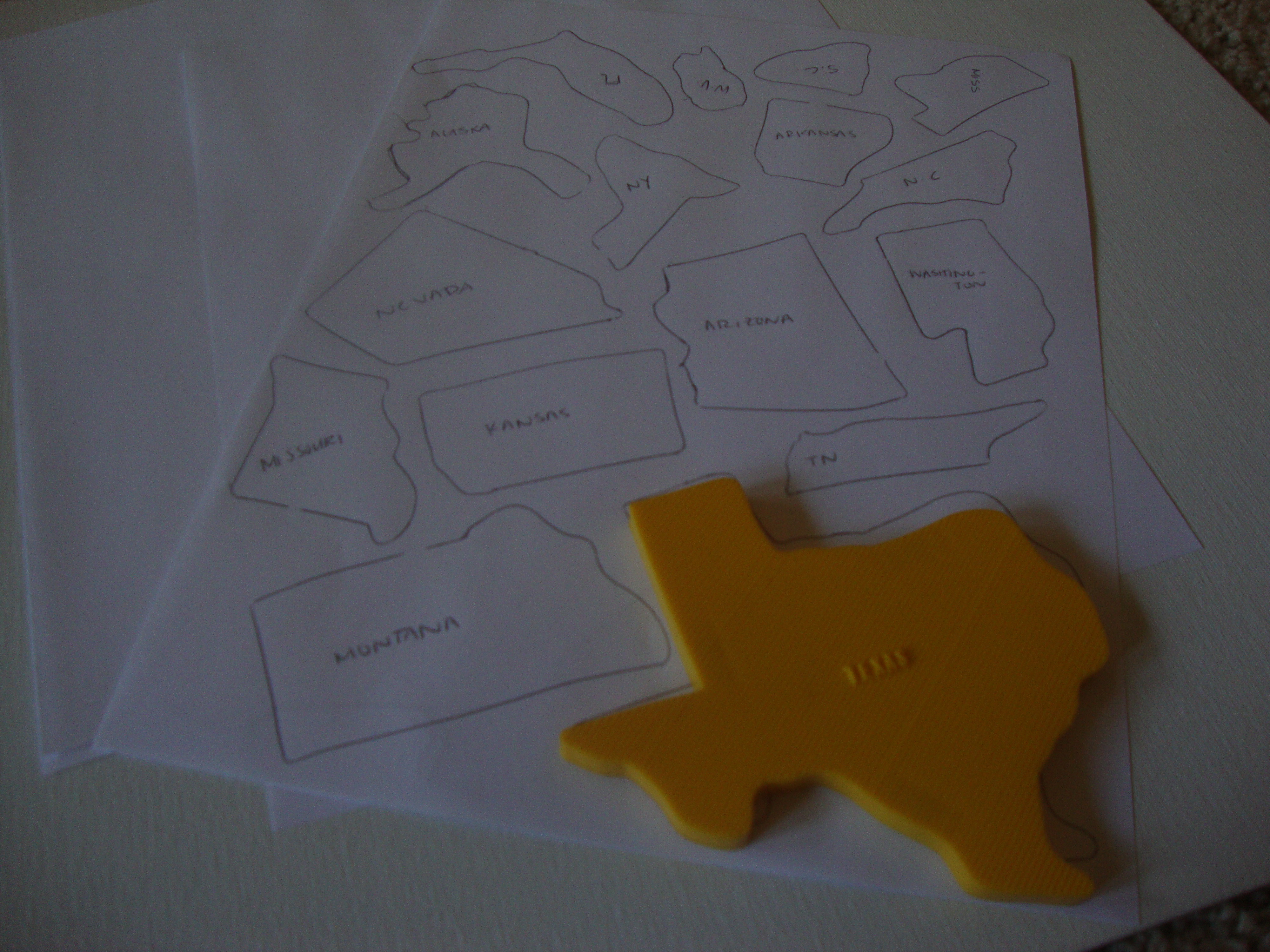
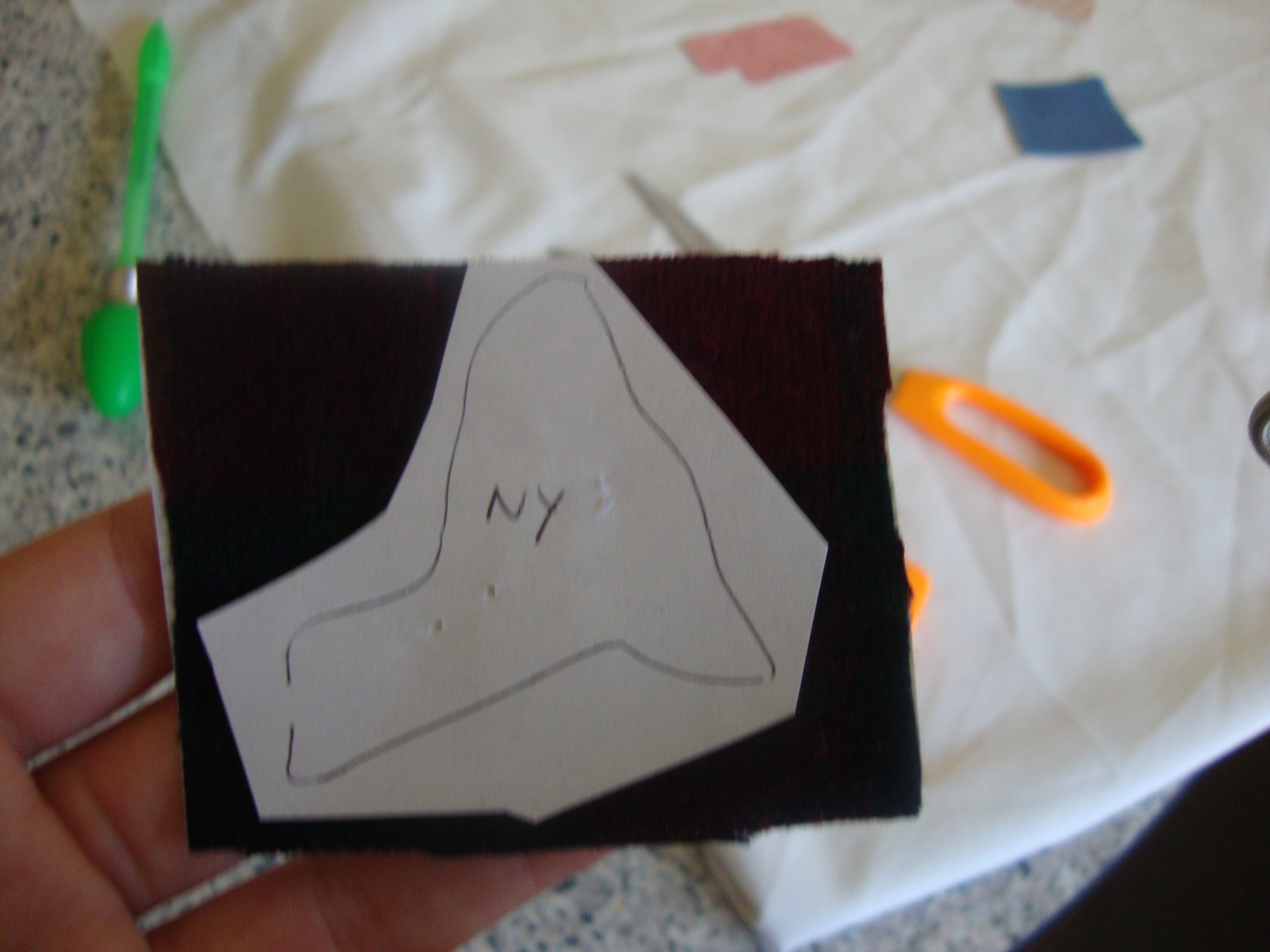
I used the puzzle to make stencils on printer paper. When cutting each state out, don’t cut on the line but instead around it. Then I found a piece of fabric for each state (note, I chose not to do Alaska and Hawaii).

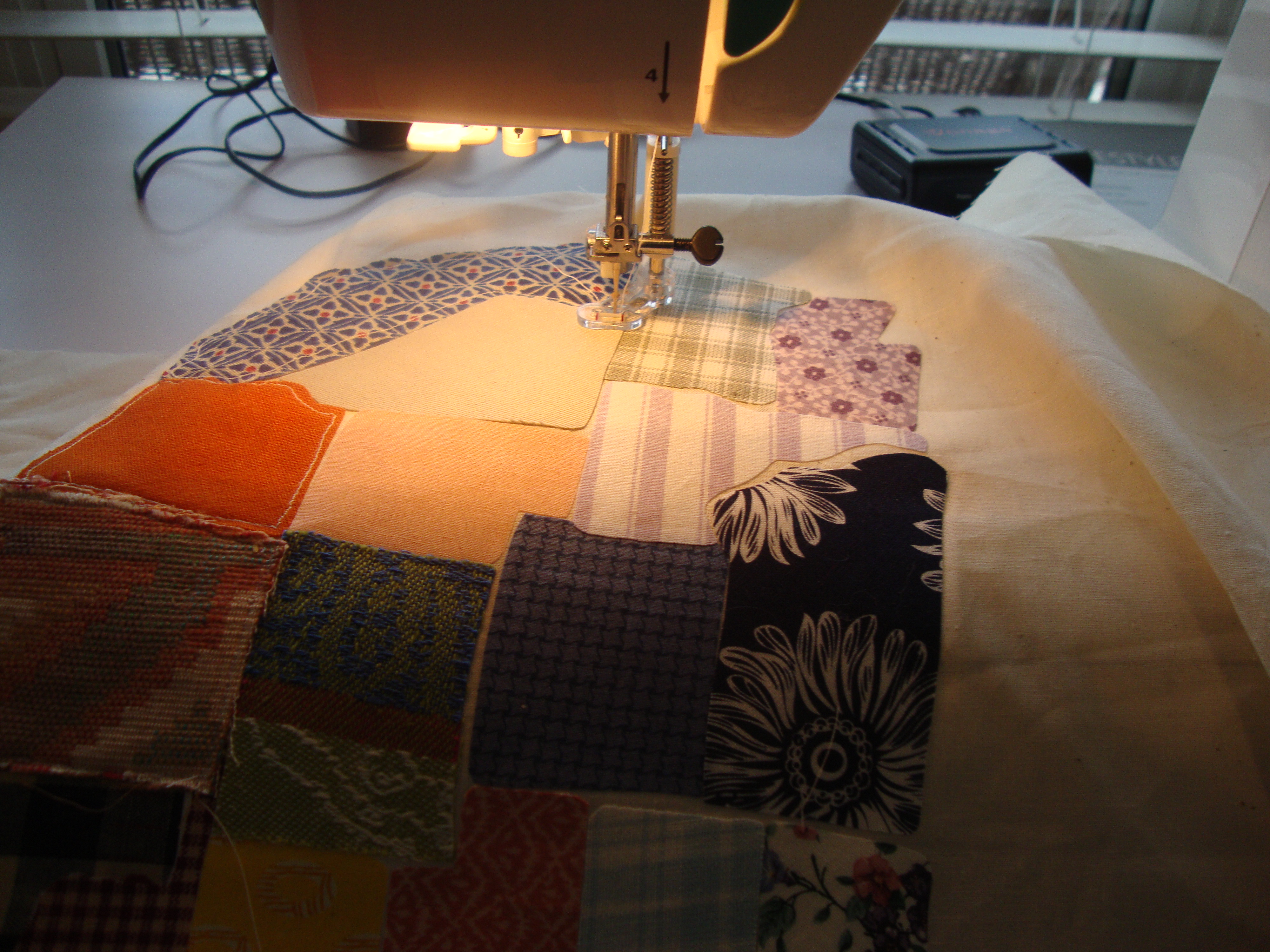
Next, I used Heat-n-Bond which I purchased at Joann’s. The directions on the package is pretty clear, but basically, cut a piece the size of the fabric. Iron the liner side. Cut the fabric to the shape you want (in this case, the shape of the state). And then once I had each state in place, I pealed off the liner and ironed it onto the muslin.

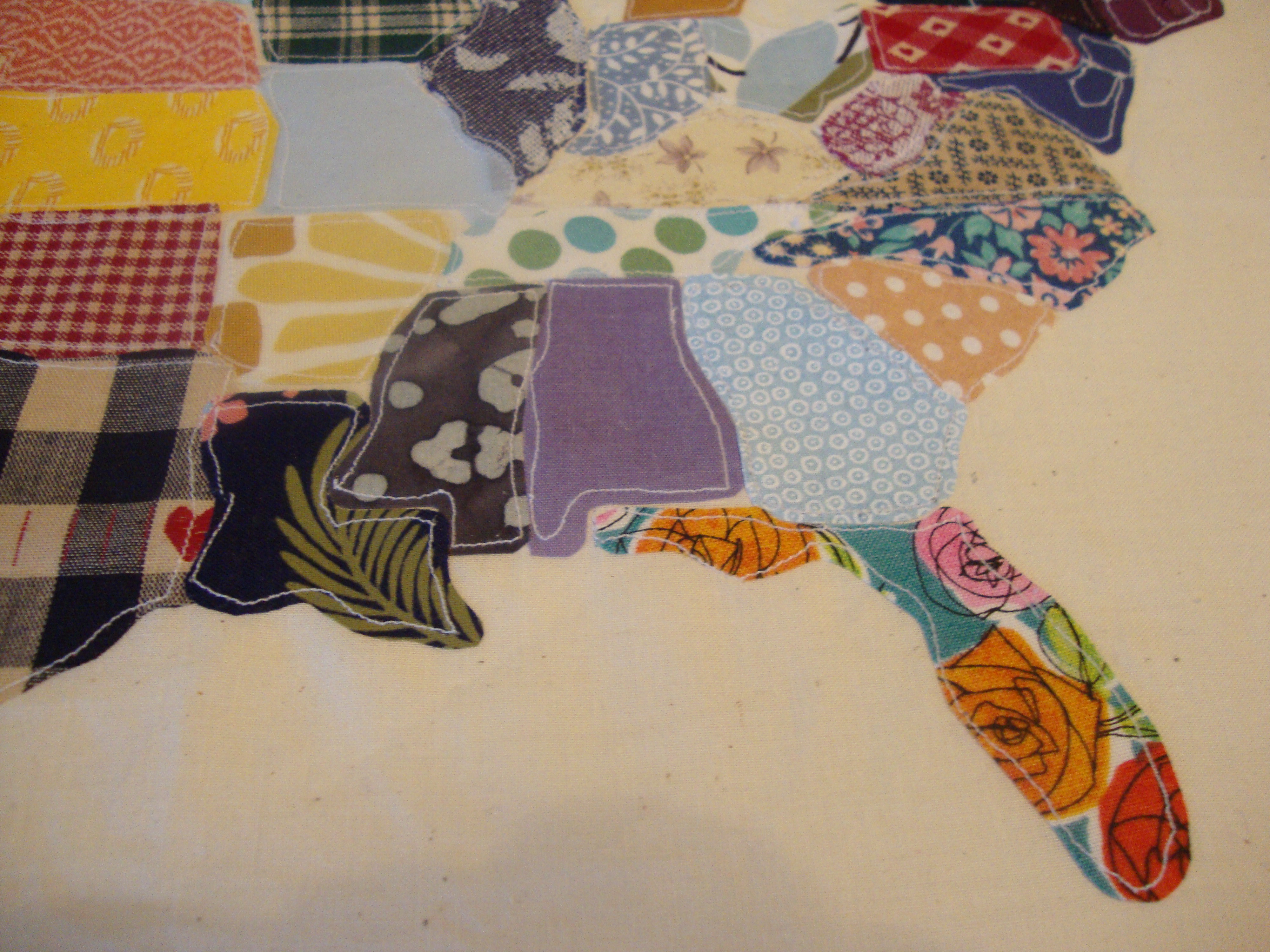
Above shows how I laid each piece out. Once ironed down, I took to the sewing machine to stitch the outline of each state. I used an embroidery foot (or a darning foot) for the first time. It was difficult at first, but you learn to get the hang of it.

I mounted the finished piece to a flat canvas (and when I say mounted, I mean I used packaging tape). I obsessed over the finished thing for about an hour, thinking I should definitely whip up another one. I could totally see this being sold at Anthropologie or Urban Outfitters for a crazy amount. Thanks to my box of scraps, this cost me less than $3!

Urban Outfitters-Inspired Felt Wall Art

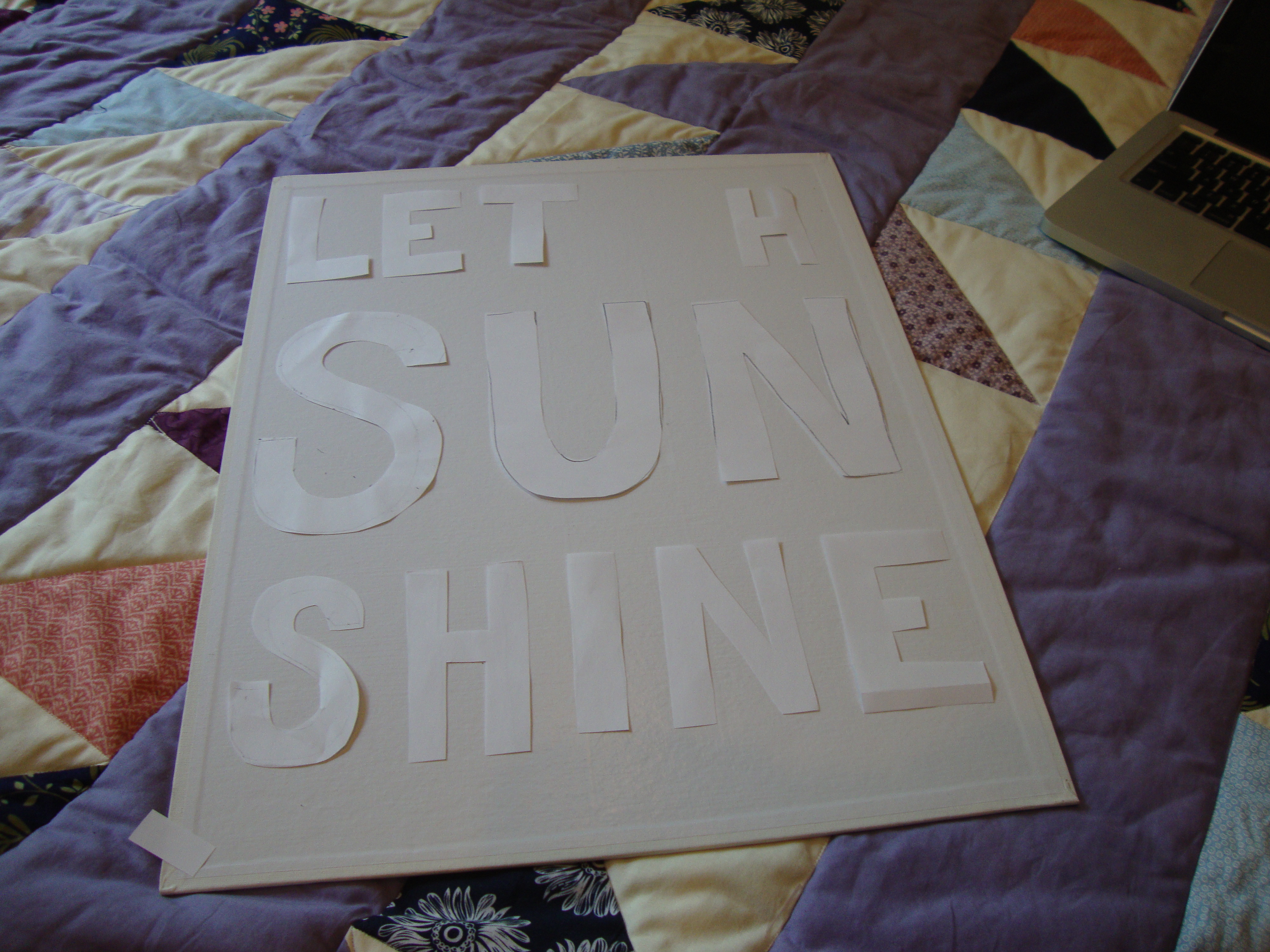
They say copying someone is the greatest form of flattery. In this case, it’s to show that an item can be wildly over priced. I found this wall art on urbanoutfitters.com. Their price was $59 – I was able to reproduce it for only $6.

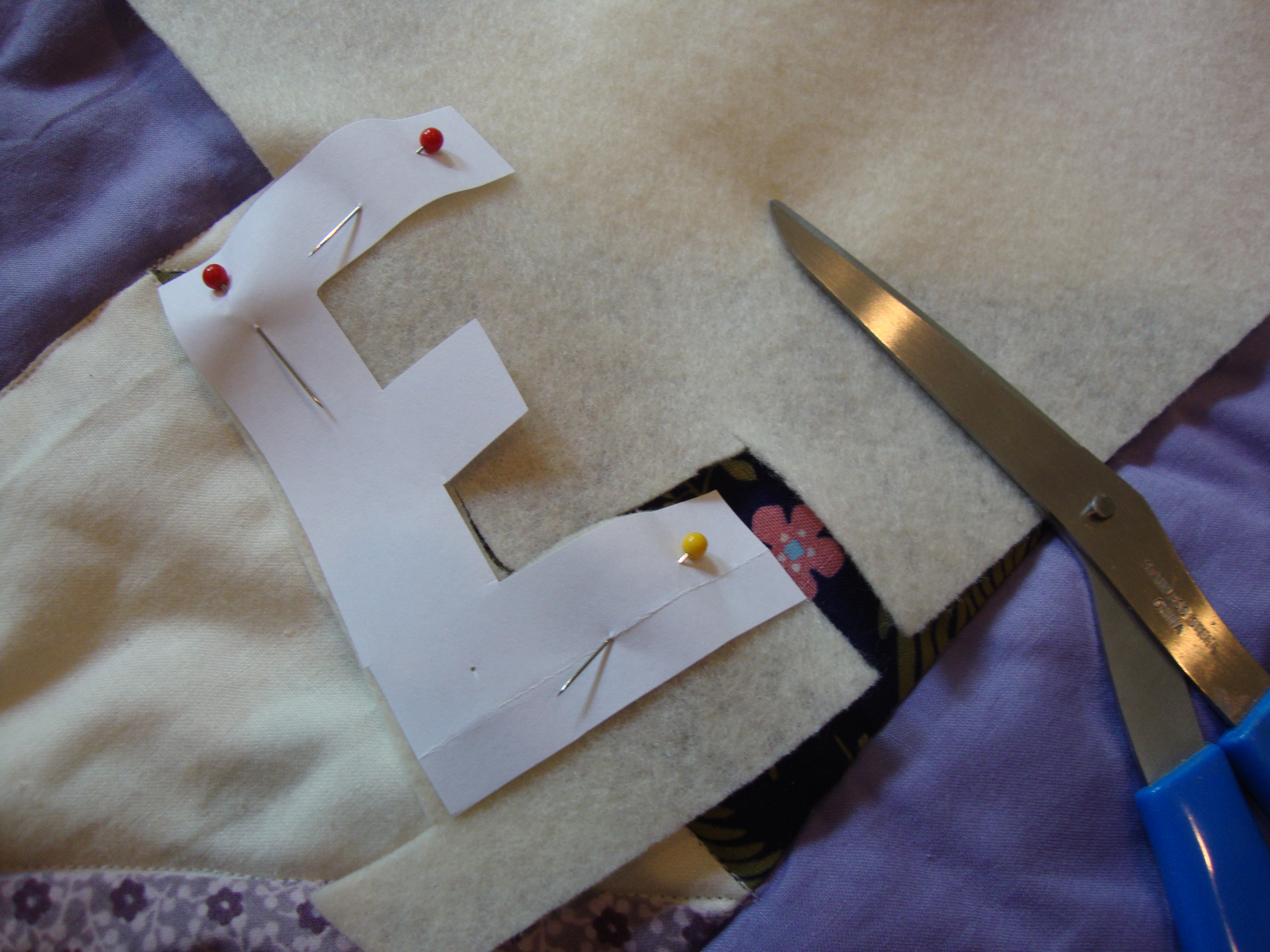
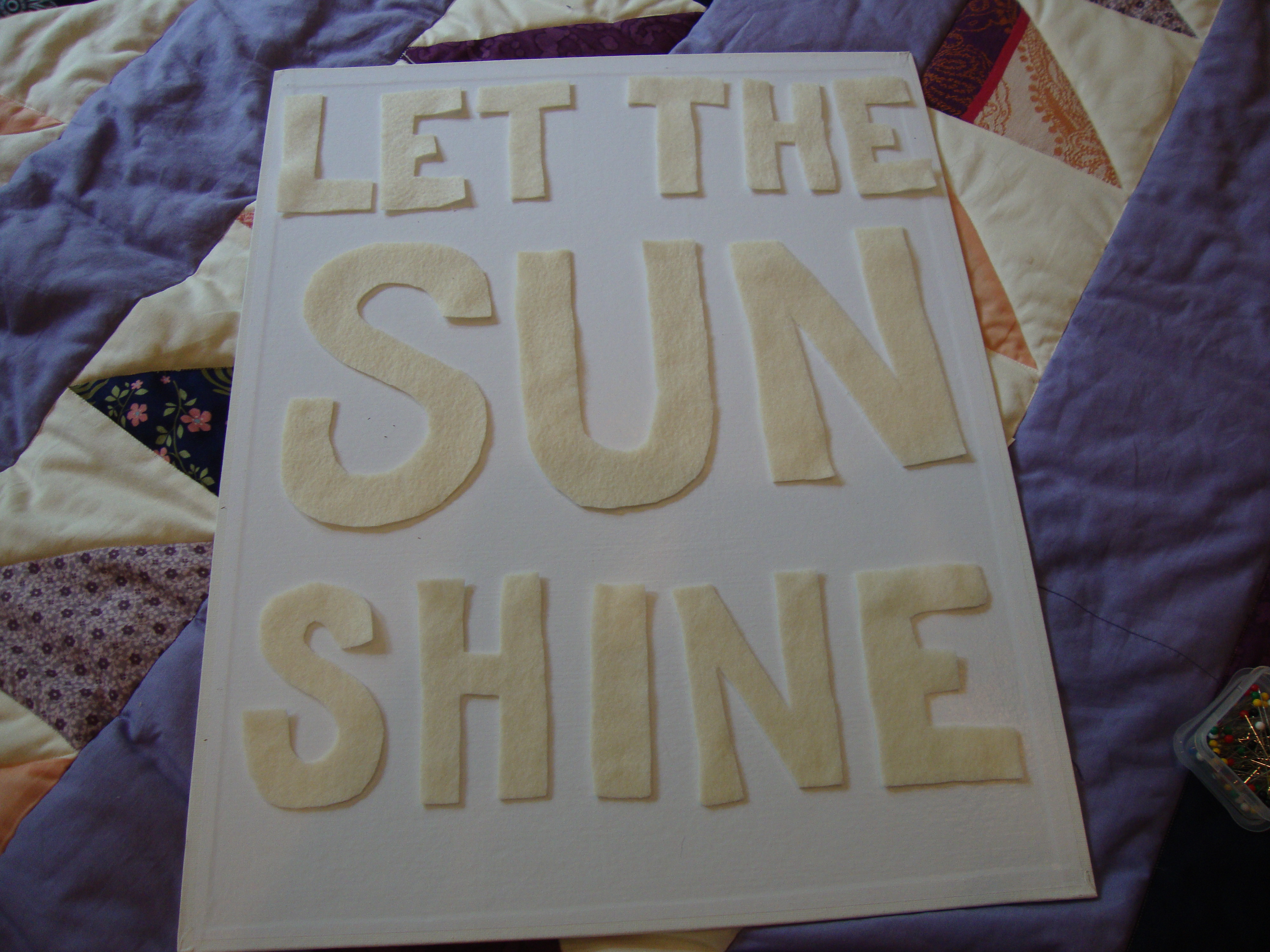
All I needed was a 1/2 yard of fabric, 3 sheets of felt and some embroidery thread. First, I cut out the letters using paper to act as a template (so I don’t waste any fabric).


Next, I simply attached the felt letters to the back fabric using a blanket stitch.