A Chevron Quilt

DSC_0502

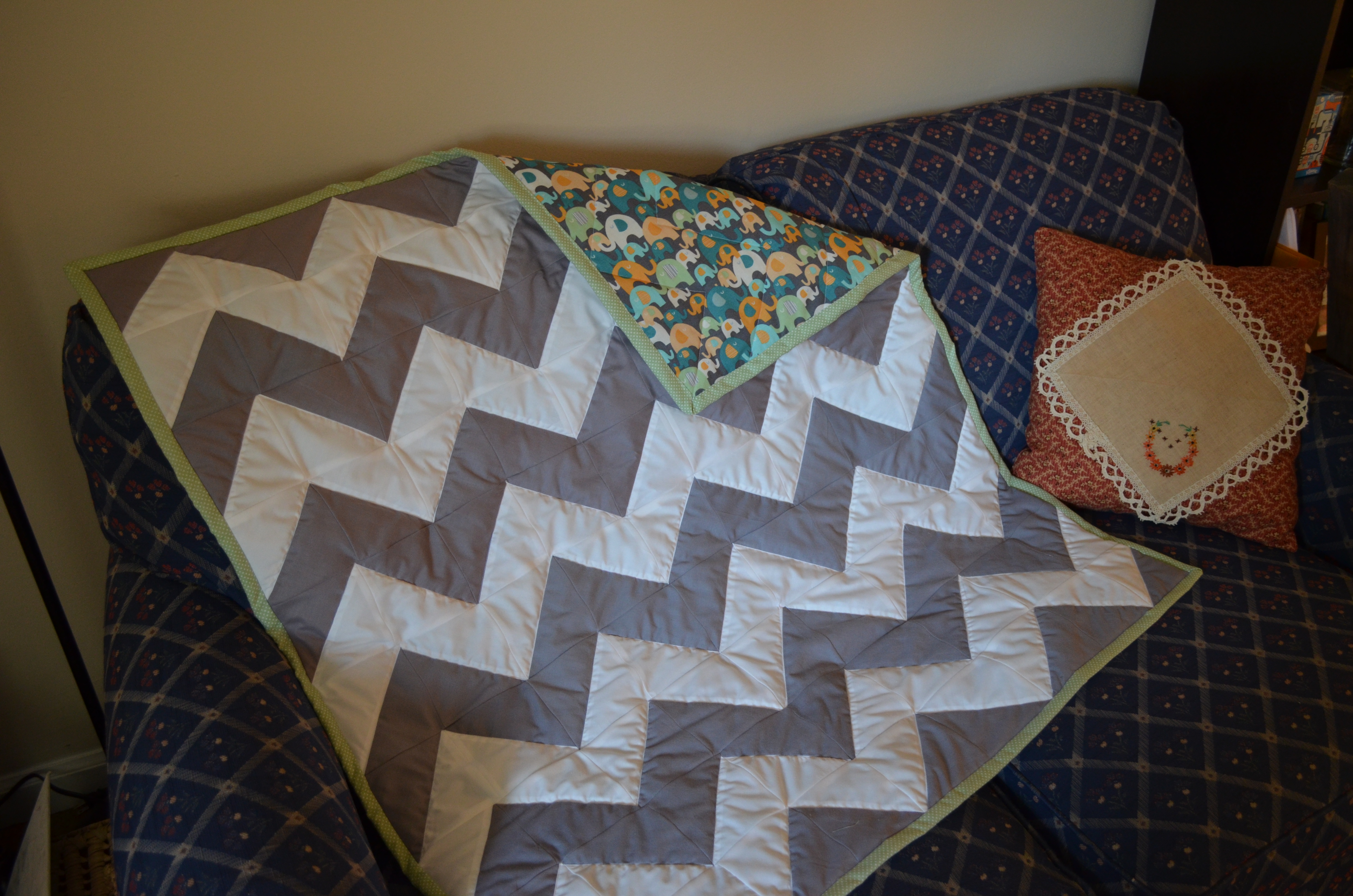
Several months ago, I pinned a chevon quilt on Pinterest with the intent of making it. But as the months past, the idea never came to fruition. That is, until I started to think about what I wanted to make for a friend whose baby is due at the beginning of October. I knew it was a design she would adore, and I am excited to say, it’s a design that is super easy to make.

DSC_0422

The entire quilt is made of these squares. For my quilt that was 36 inches x 40 inches, I used 90 of them.
DSC_0413

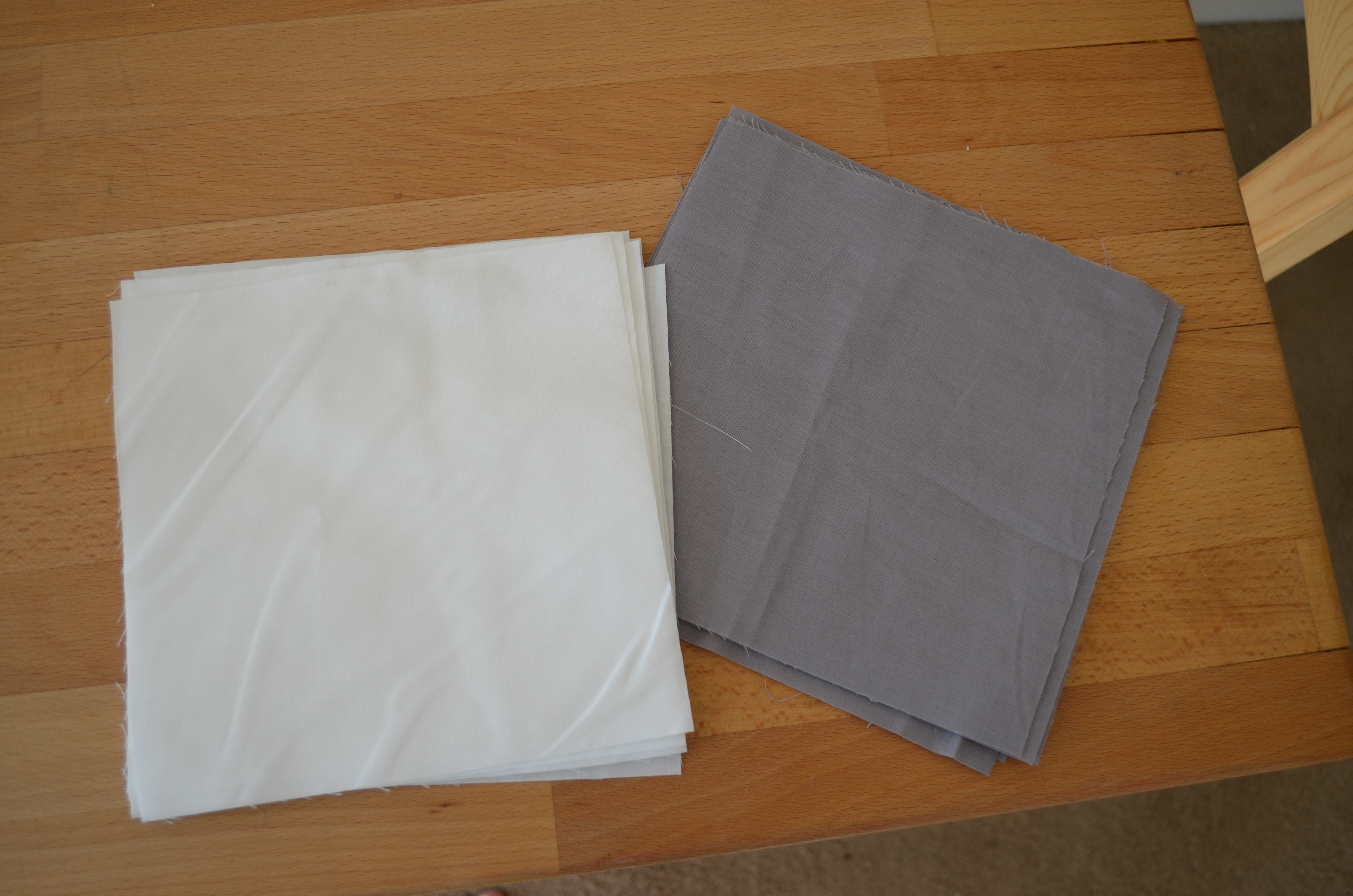
The process of making these squares is a trick that  all beginning quilters should learn. Once made, these squares can be arranged in several different patterns, including a pinwheel. The first step is cutting out 7×7-inch squares of both the white and grey fabric.
DSC_0414

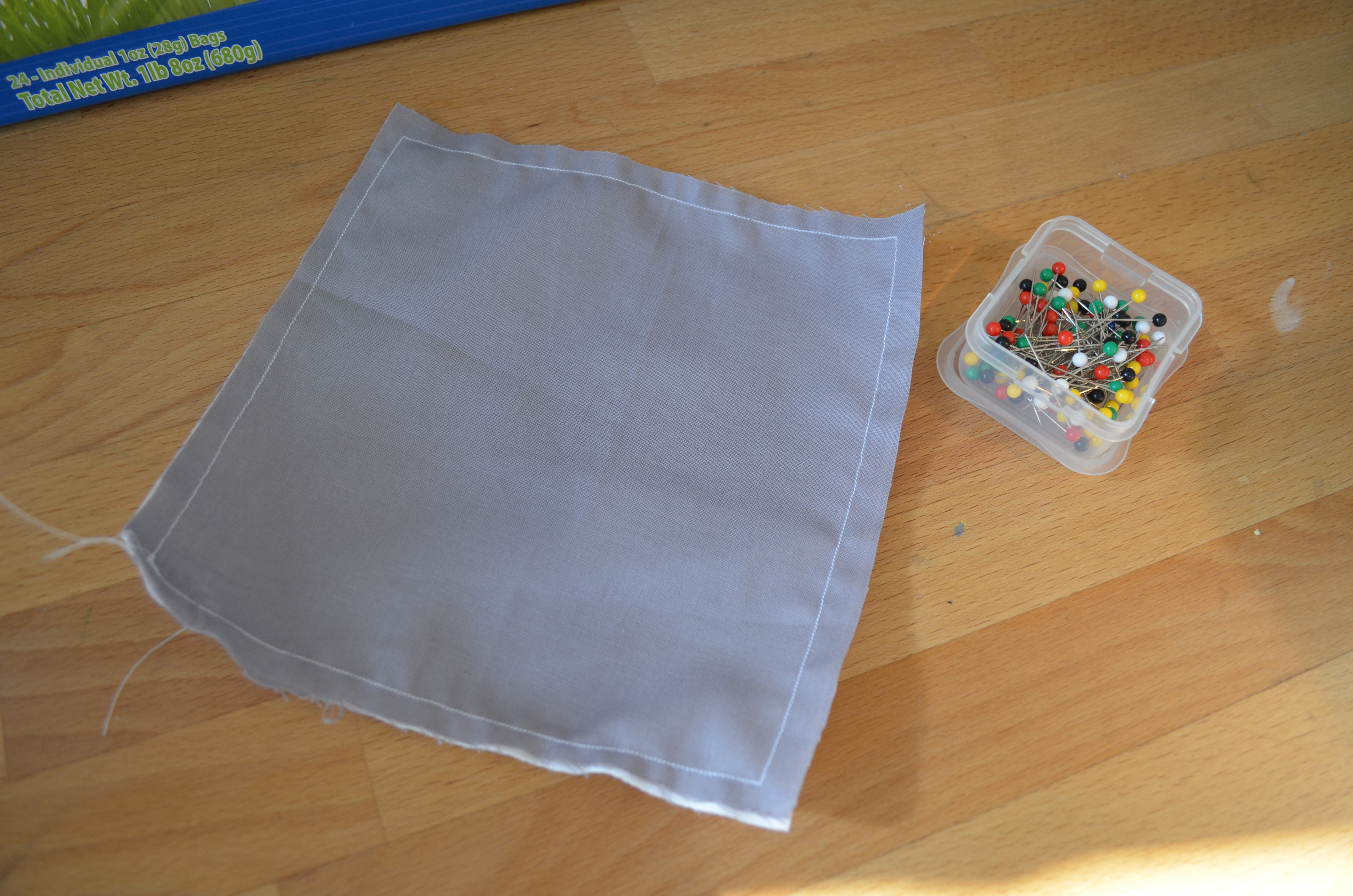
Next, I  layer a square of the grey fabric on top of one of the white and sew a border, using a 1/4 inch seam allowance.
DSC_0418

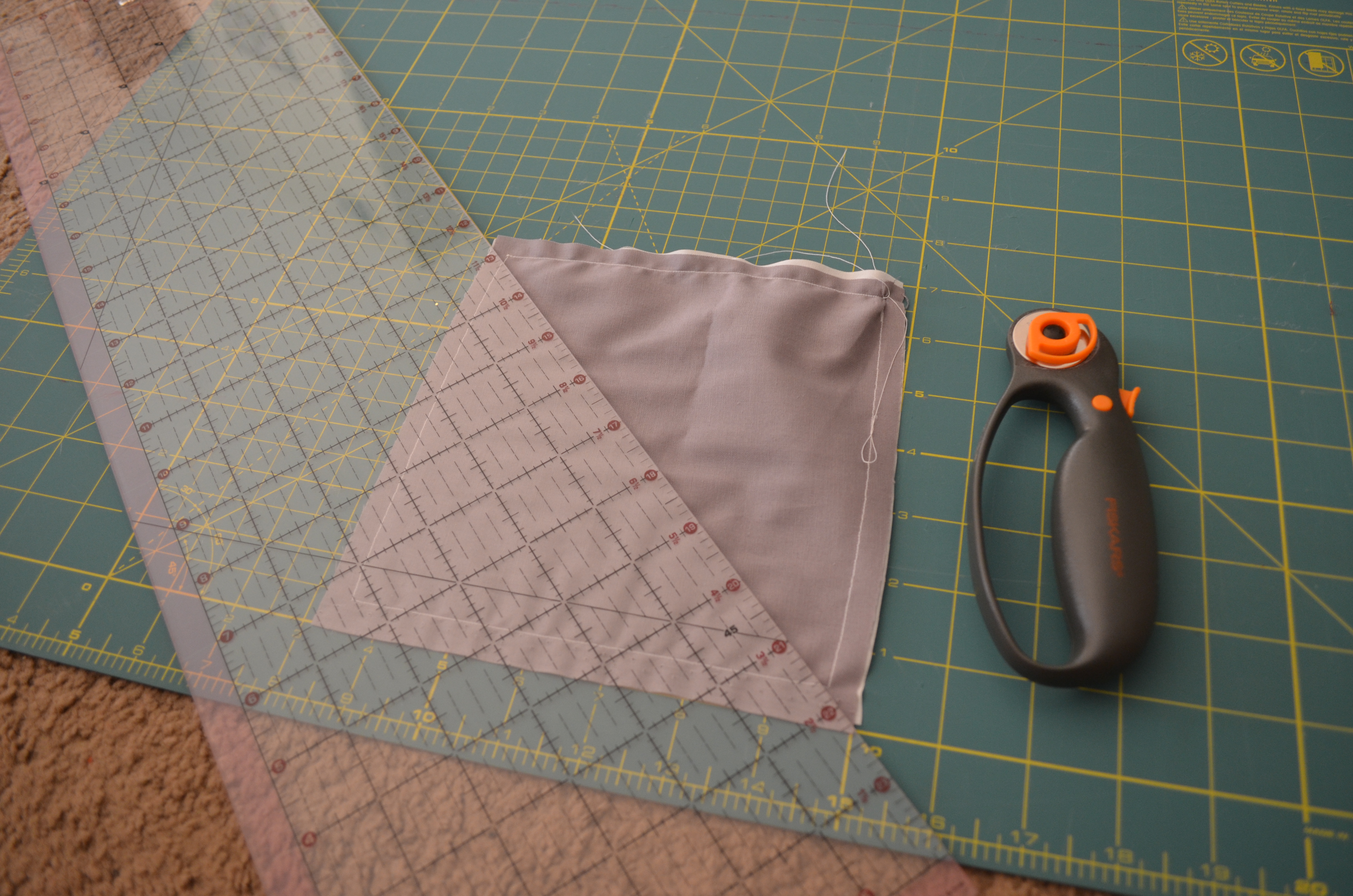
I then cut the square in half, diagonally. I repeat this step with the two triangles I just created.

DSC_0419

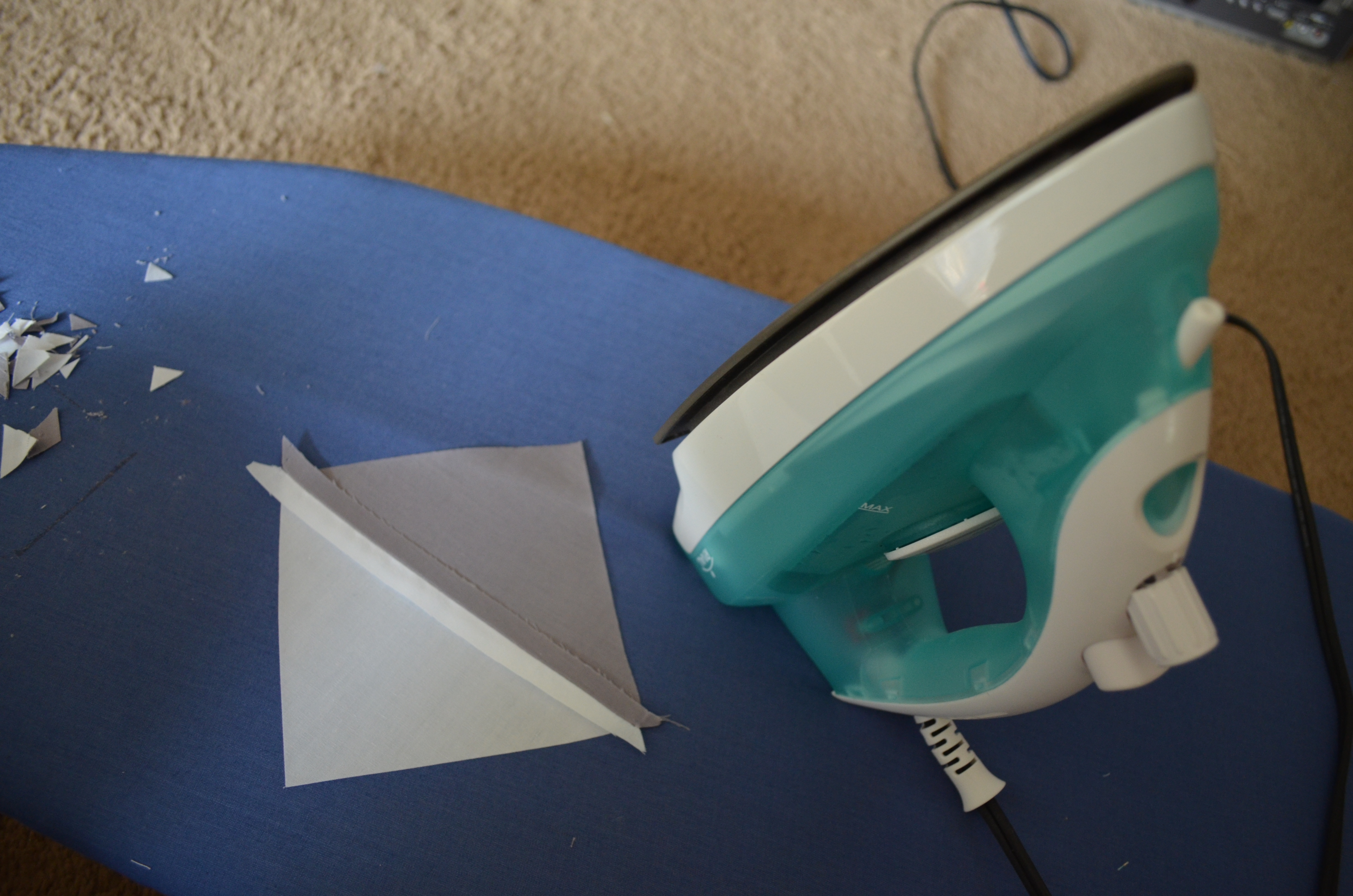
To finish, I unfolded the triangles and ironed the seams. I also cut off the extra fabric at the corners. As you can see, one 7-inch square quickly creates 4 smaller squares. Once you get the hang of it, you’ll find you have 90 squares before you know it.
DSC_0477

DSC_0478

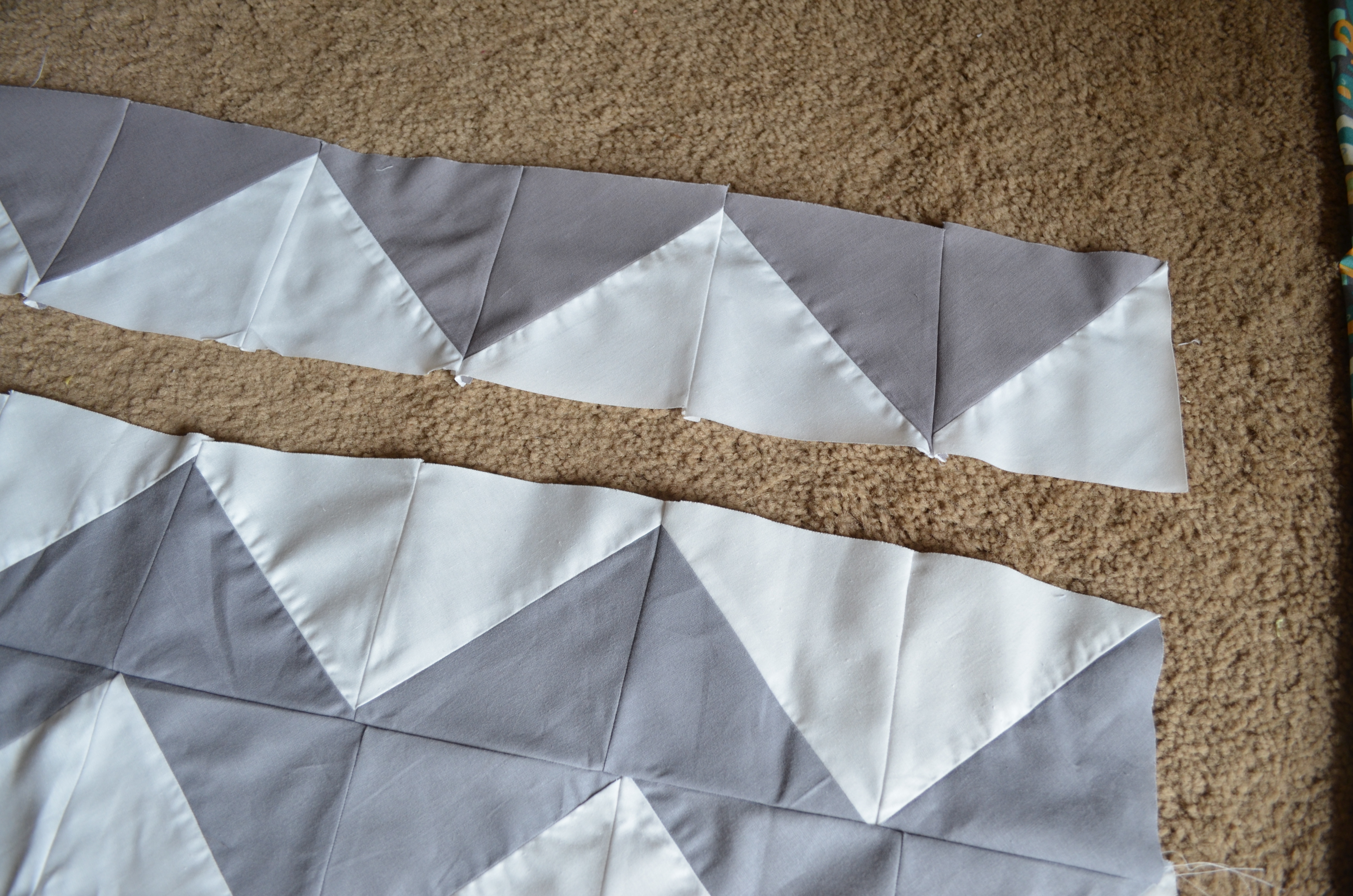
Once you have made all of the squares, you simple have to sew them together. My quilt was 10 rows of 9 squares each. You arrange the squares so the same colors are always touching.

DSC_0482

Since we’re dealing with squares, it means we’re exclusively dealing with straight lines. So once you create the rows of 9 squares, all you have to do is sew the rows together.
DSC_0484

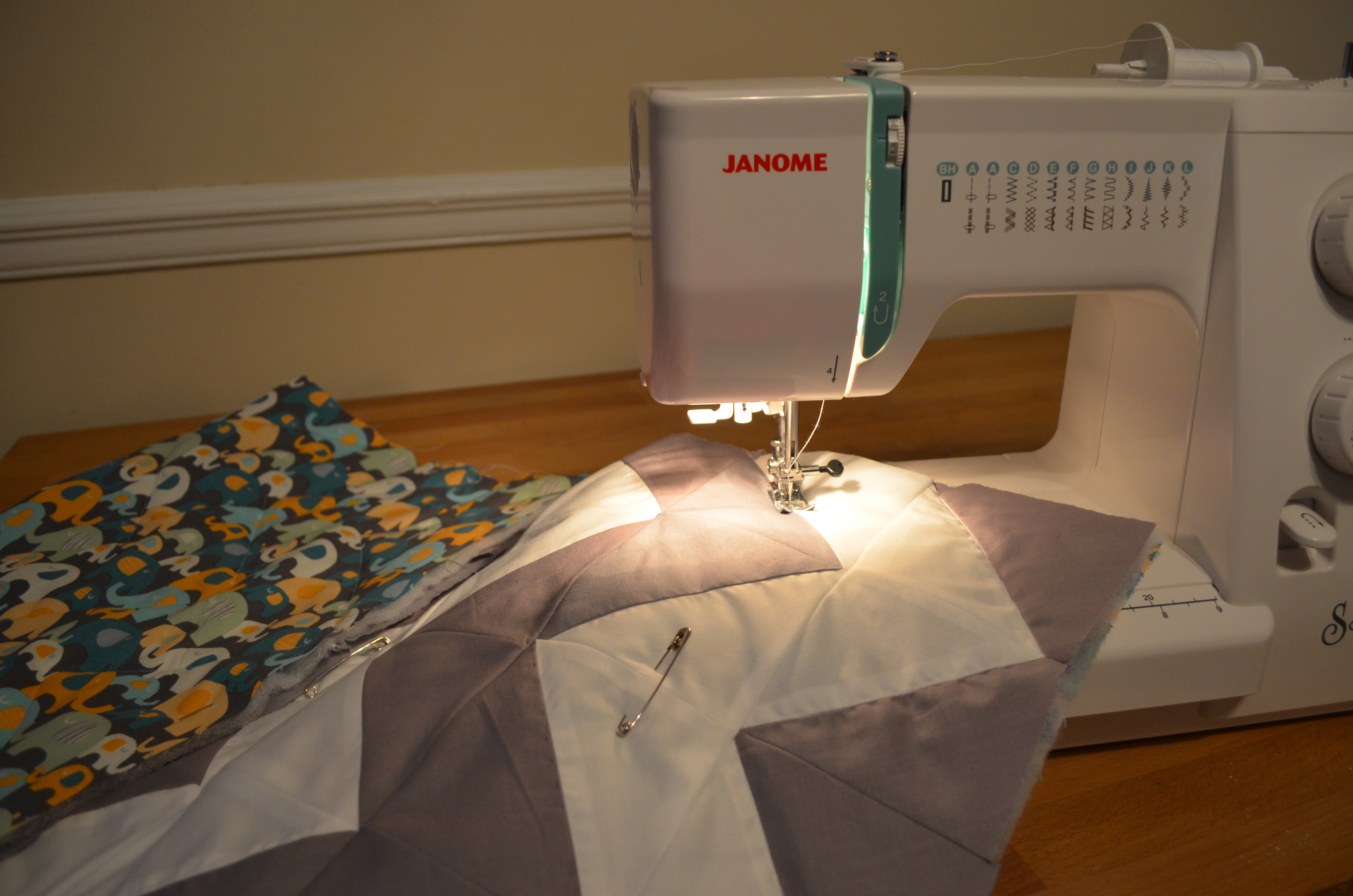
To accompany the chevon design on the front of the quilt, I used a yard of an adorable elephant pattern for the back that matches perfectly (if I do say so myself).

DSC_0488

Once I basted both sides of the fabric to the polyester batting I purchased, I simply quilted along the chevron pattern.
DSC_0492

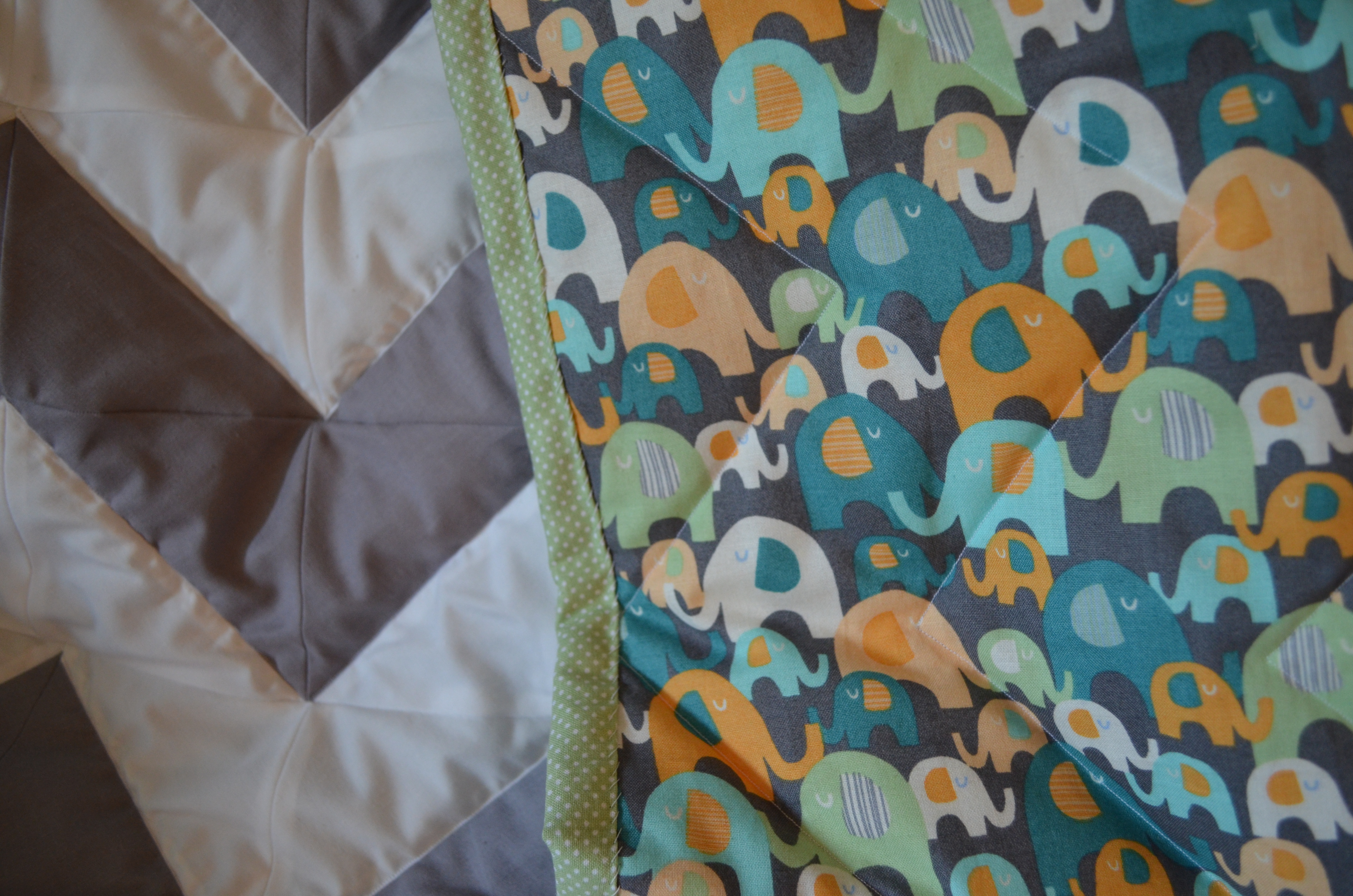
For the binding, I chose a green fabric that matches one of the elephants on the back. I cut the fabric into 2.5 inch stripes, sewing them together to have enough to fit the diameter of the quilt. I next ironed down a half inch of one side of the fabric.

DSC_0494

I sewed the binding to the quilt, using a 0.5 inch seam, using my short cut you can read about here for the corners.

DSC_0496

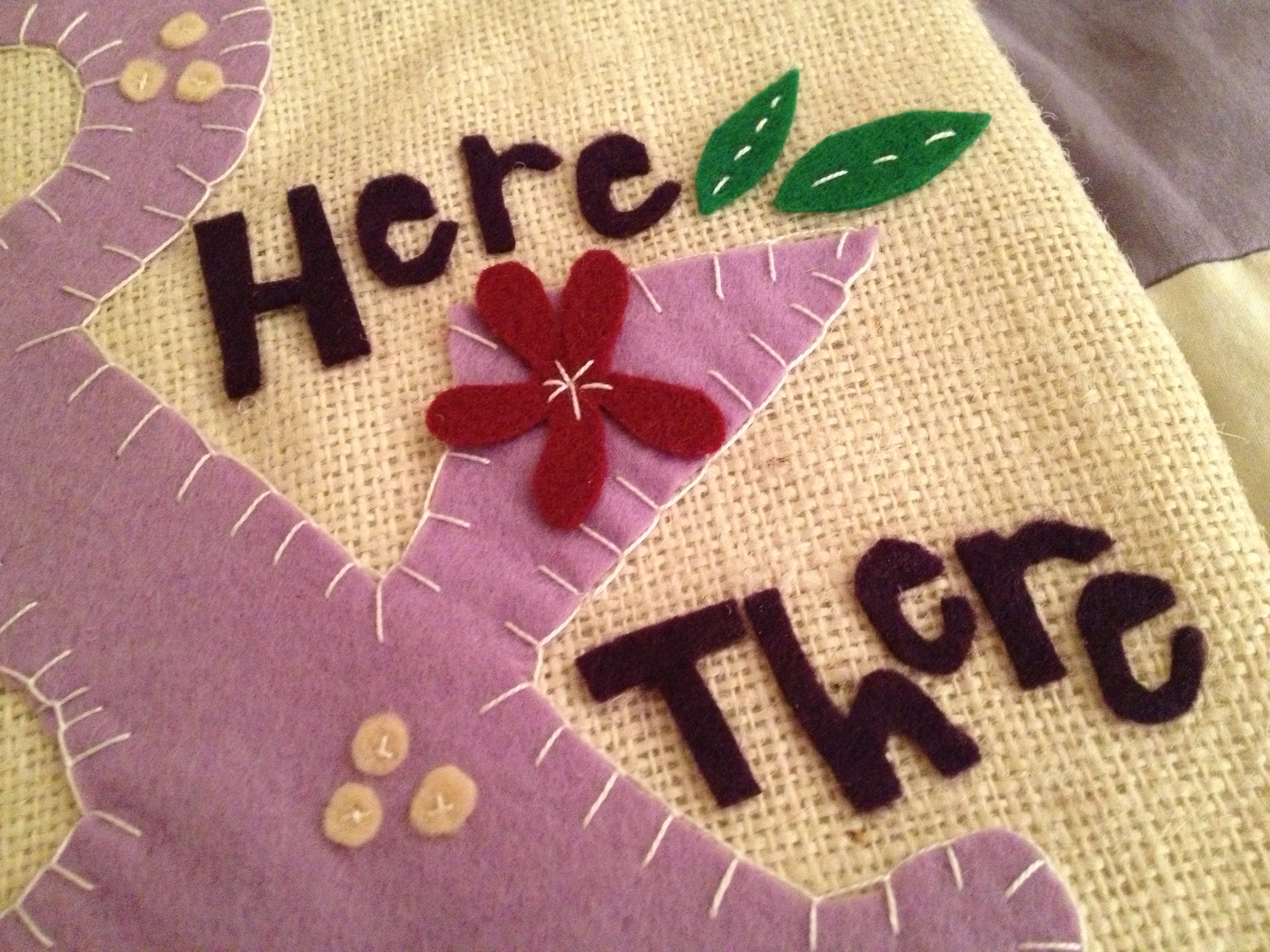
Now that I have made a handful of quilts, I wanted to create a tag that would start to mark them as mine. But for this quilt, I didn’t want to use my initials since I am making the quilt for a friend, so I decided to use the year – the year her baby would be born.

DSC_0504

I couldn’t be more happy with the final result. Of course, the quilt contains a few mistakes (if you look closely, you’ll notice I accidentally purchased two different colors of grey fabric). But with such an easy first-time experience,  I know I will make another chevron quilt in the near future. And coincidentally, when I gave the quilt to my friend, I found out the chevron and the elephants match her nursery perfect. I guess you could just say I am very on top of the current trends!
DSC_0503

DSC_0505

The Southern Pie Party

At my job, I look at recipes all day, everyday. And some days, you just have to come home and make them! So when the physical copies of Southern Living’s new cookbook, The Southern Pie Book, arrived in the office, I invited a few friends over for what we called Pie Party 2013!

We made three pies: the Margarita Key Lime Pie, the Chocolate Fudge Pie and Mama’s Peach Cobbler. And trust me, we didn’t skimp on anything. When the recipe called for whipping cream, we used whipping cream, causing the pies to be oh-so-delicous! (Many happy dances occurred.)
Lucky for you, the book goes on sale this week!
Baby Carrots

Growing carrots requires patience – lots and lots of patience. But after almost 2 months, I finally have something to show.

DSC_0275

I read in an old Southern Living Garden Book that it is vital to thin out the carrots at this point, removing some of the small carrots to make room for the rest. Easy. With all of the rain this summer in the Southeast, I have really been able to ignore the carrots and let them grow.

If you want to plant your own carrots in a 5 gallon bucket, read my original post [here].

DIY Anthropolgie’s “Pomdelion Bouquet”

20130814-222110.jpg

If you are like me and treat the Anthropolgie’s website like Pinterest, then you too will notice that some of the expensive items they sell are actually really easy (and very cheap) projects you can make yourself. Take for example the store’s “Pomdelion Bouquet.” You can buy these yarn pom-pom flowers for $18 each or make as many as you want for less than $5.

20130709-185955.jpg

I’ve made these flowers before and explained how to make them in a pervious post (aren’t I so trendy.) But I will give Anthropolgie’s credit for using the golden-yellow colored yarn. Lucky for me, my roommate had some leftover yarn of the same color from a Harry Potter scarf she made months before.

20130709-185723.jpg

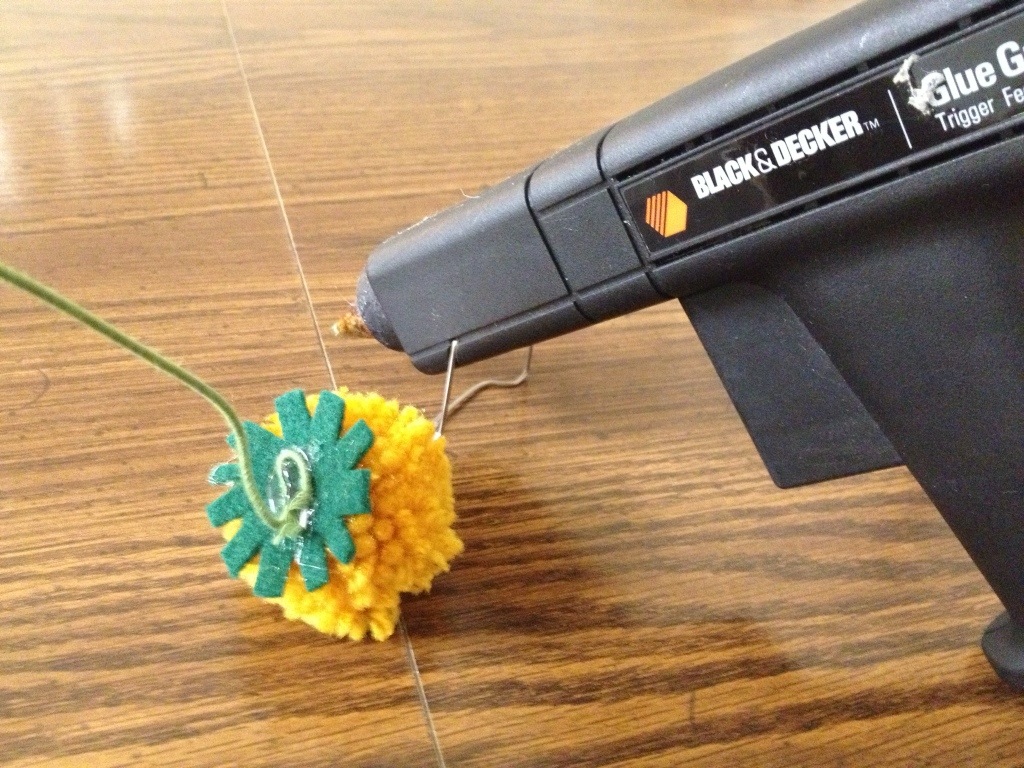
Once I made the pom-poms (again, see link posted above), I simply glued on a piece of green felt as the leaves and a piece of floral wire as the stem.

20130709-185733.jpg

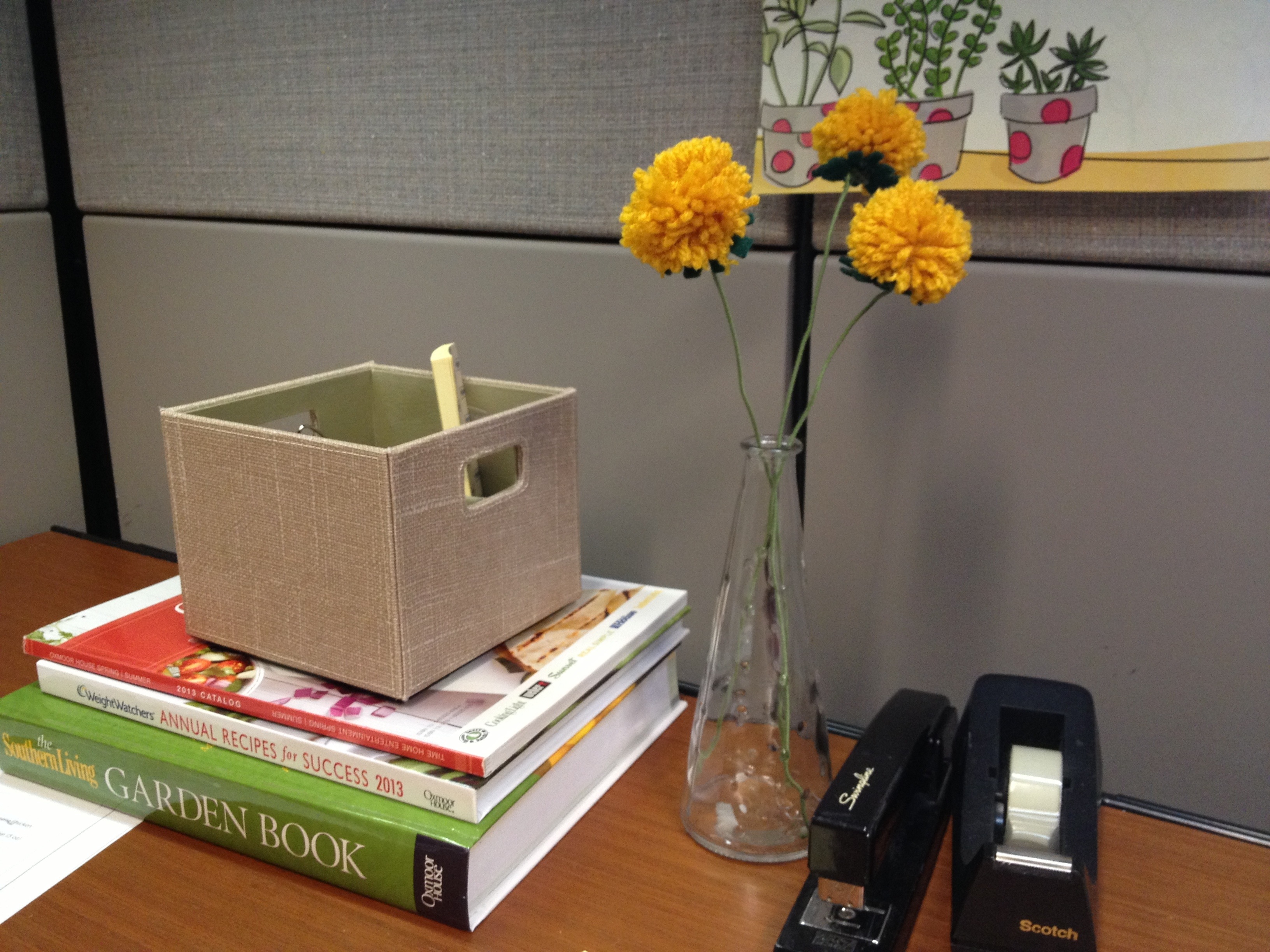
With a cute vase from Ikea, these yarn dandelions were the perfect addition to my cubicle at work.


DIY Ombré Crate Bookshelf

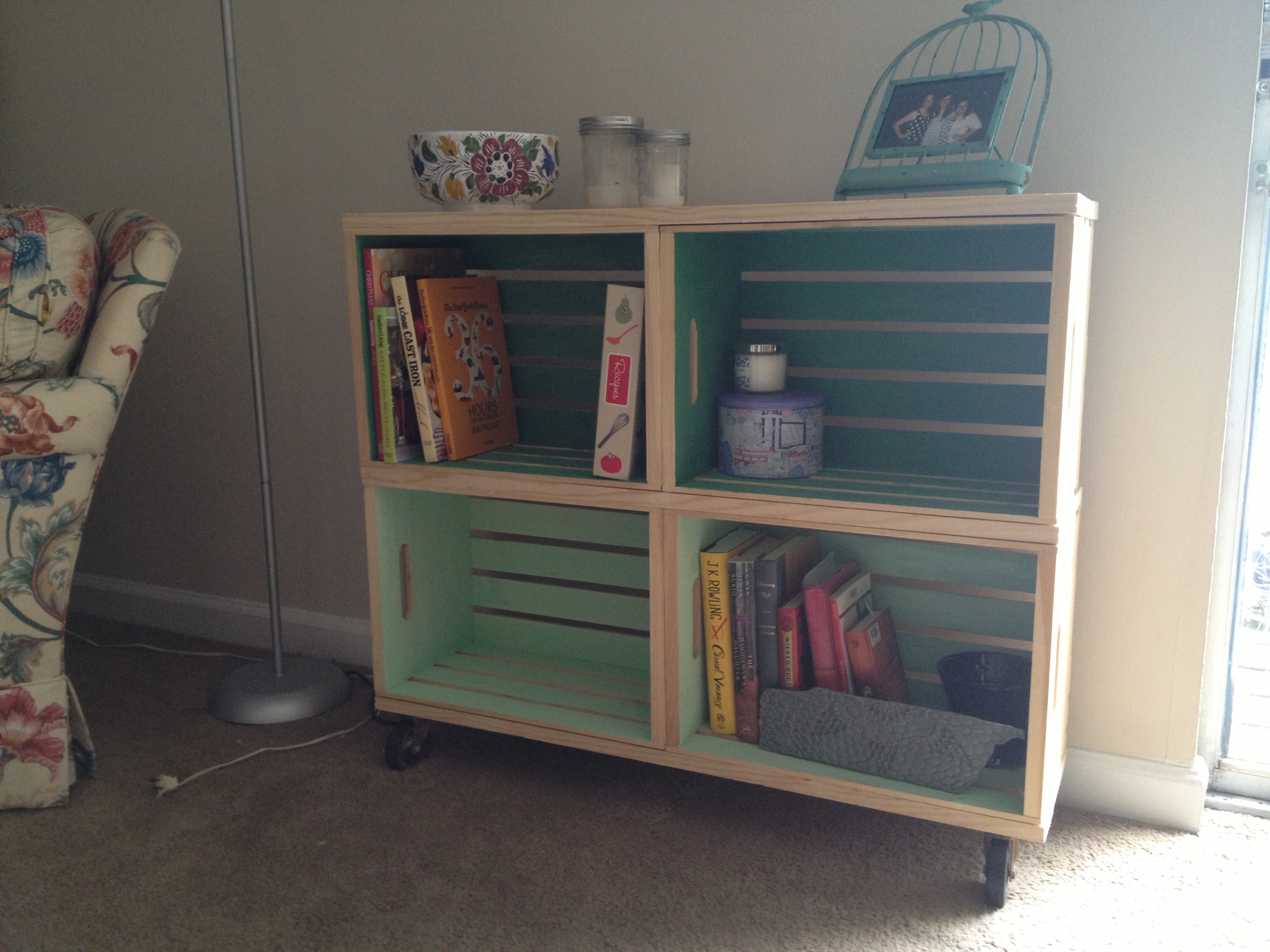
Four crates, three pieces of wood, a handful of nails, a tube of liquid nails and vintage wheel casters: the ingredients I used for my first attempt at carpentry. I will tell you this, it was not easy, and I was quickly frustrated by the frequency of my mistakes. But the end product is something I will always treasure.

This is how I built a bookshelf out of wooden crates (along with the lessons I learned from doing it wrong).

_DSC0143

Lesson #1: It is stupid to paint the wood before you start building.

Just stupid. Before I even bought nails, I painted two of the wooden crates, which proved futile. I ended up having to sand and paint them again once the bookshelves were assembled.

_DSC0151

Lesson #2: Liquid Nails are great, but make sure you have several wood clamps if you decide to use it.

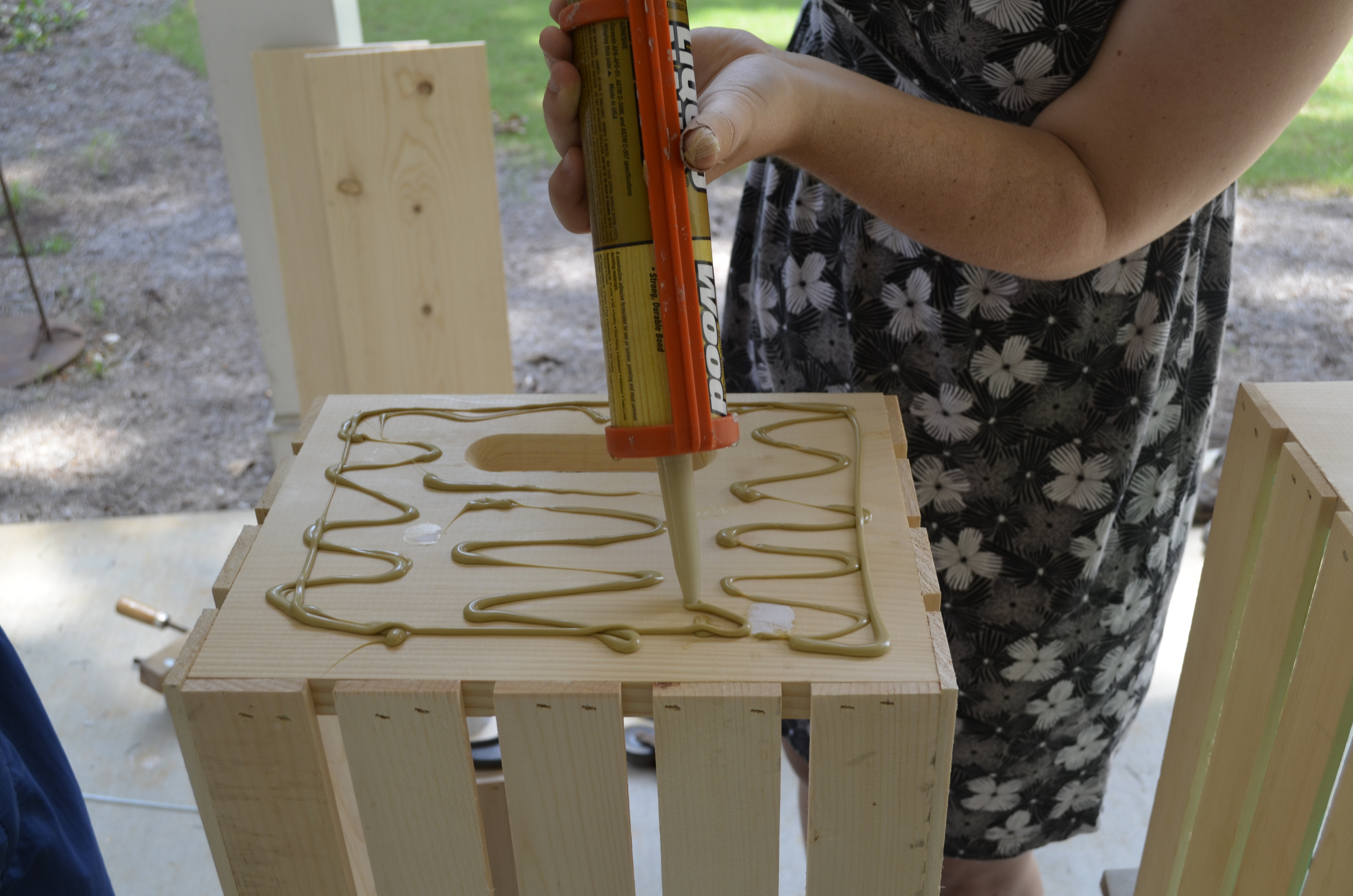
Being new to the world of power tools, I saw Liquid Nails as an easier option – compared to learning how to use the power drill my father gave me. And yes, Liquid Nails are super easy. Using a caulking gun, I evenly distributed the glue, leaving an inch margin around the edge.

_DSC0158

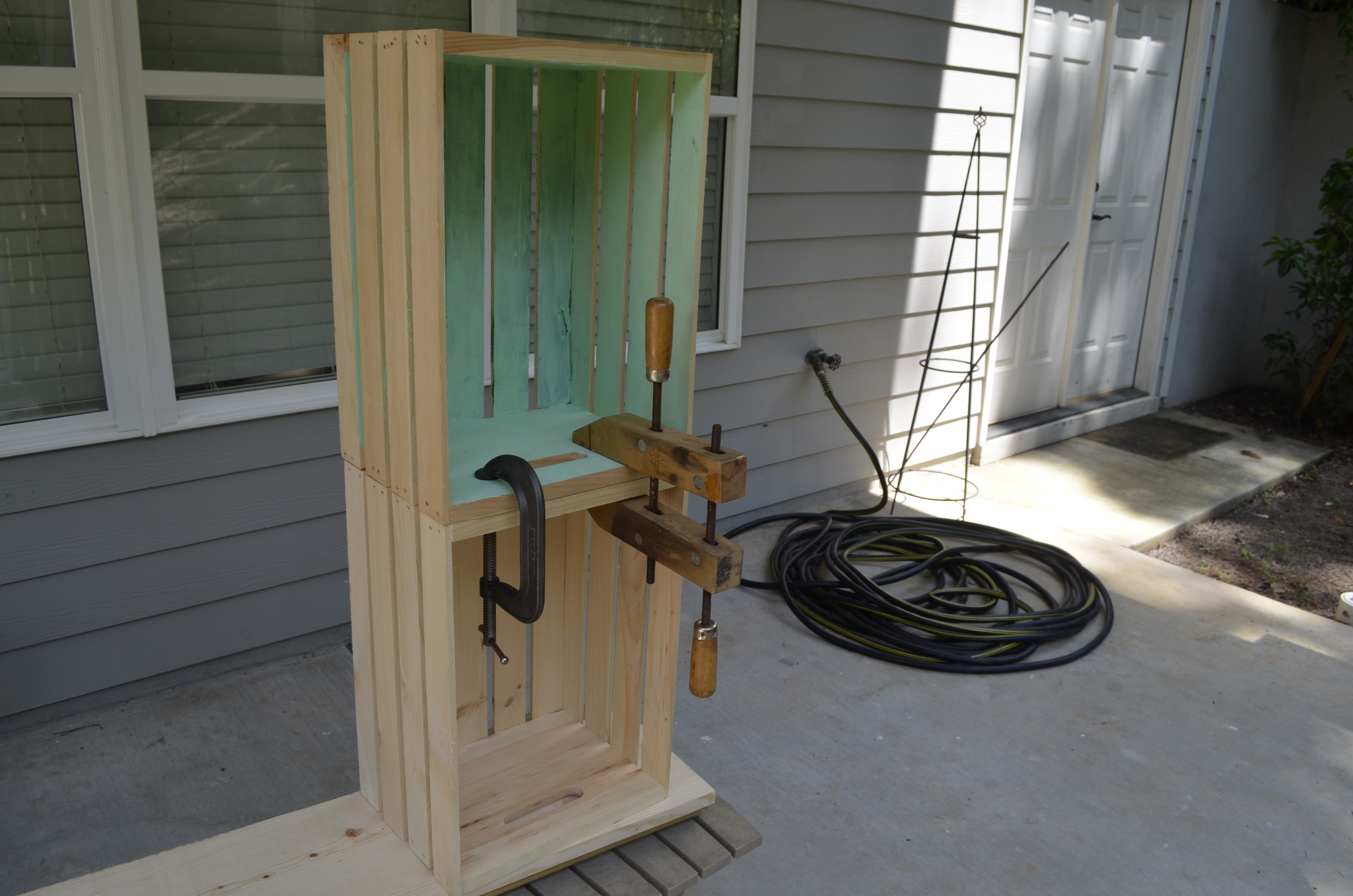
I had two clamps (see the picture below). The wooden clamp on the right worked great, distributing pressure relatively evenly. The problem is, I needed like four more. The metal clamp did not apply pressure evenly. It really wasn’t that helpful. The other issue I faced was separation on the back side of the crate.

_DSC0163

Lesson #3: Wood sizes are not the same as the advertised measurements.

To make the bookshelves more sturdy, I decided to use three planks of wood – one below, between and on top of the crates. To do this, I purchased one 10-foot long 1×10 wood board. When I went to the cutting station at Home Depot, I had him cut the board into three 3-foot long pieces. And because the width of the crates is 9 inches, I needed him to cut one inch off of the width of the boards. Sadly, the Home Depot employee said he cannot do such a shallow cut.

I felt defeated. I do not own a saw – of any sort. These planks were going to jet out a whole inch. The perfectionist inside of me was going crazy. The Home Depot employee must have seen my face. “Well,” he said, “you know wood is not the exact size we advertise. It’s a known thing”

I look him in the eyes. Obviously, I did not know that. Sure enough, we measure the wood, and it is exactly 9 inches in width. The wood turned out to be perfect.

_DSC0177

Lesson #4: Don’t be lazy. Use painter’s tape.

I love the look of natural wood, but I wanted these bookshelves to have a pop of color. So my goal was to paint only the interiors, leaving the edges and outsides raw wood. I started out being a little overly confident, thinking I could paint within the lines. But quickly, I made a few mistakes here and there. Luckily, sanding the wood once it drys can remove the paint, but I learned that painter’s tape is the easiest, time-saving solution.

DSC_0059

Lesson #5: Craft paint is not ideal for this type of project. 

Though the small bottles of paint were nice to test paint colors, they definitely did not provide enough paint for the entire project. I had to go back to the store to buy several more bottles, proving to be less cost-efficent than if I bought a small can of paint from Home Depot.

I decided to use two different color to create an ombré effect (because Pinterest tells me it’s so trendy). I was hesitate about it at first, but the two colors I chose ended up being a perfect combination.

_DSC0111

Lesson #6: It’s important to buy the right size screws.

Though I did not make this mistake, I recognized that this is an important thing to consider. In my case, I did not need the screw to connect with the second piece of wood. I just needed to attach the wheel casters. With a 1 inch-thick piece of wood, I used 3/4 inch-long screws.

I found my wheel casters at construction warehouse sale – 4 wheels for $5. They were rusty and had flattened sides. (I liked how it provided some character.) But you can purchase brand new wheels at Home Depot for around $5 each.

DSC_0052

Securing the wheels in place, I made sure to measure off their placements first. (No one wants an uneven bookshelf.) I used a 1 inch margin from the edge.

DSC_0050

Finally, after a weekend and a few weeknights, the bookshelves came together to be the perfect addition to my apartment’s living room. And with my college days behind me, I’m sure it won’t be long until they are full of all the books I am reading “for fun!”

DSC_0060

IMG_2911

Something Beautiful

When I lived in Washington D.C. last summer, I would wander the halls of the National Museum of Art and feel envious of the painters who were allowed to spend hours recreating the masterpieces that hung on its walls. On certain lazy Sundays, I like to take up the practice of mimicking another’s work. Though it may sound strange, I find the practice rather relaxing, but truly, studying the stroke and technique of another painter is the best way to grow as a painter yourself. Today, I decided to bask in the art of flowers (ones first created by Erin Gregory).

IMG_2924

Quilting with Moroccan Fabric

IMG_2475

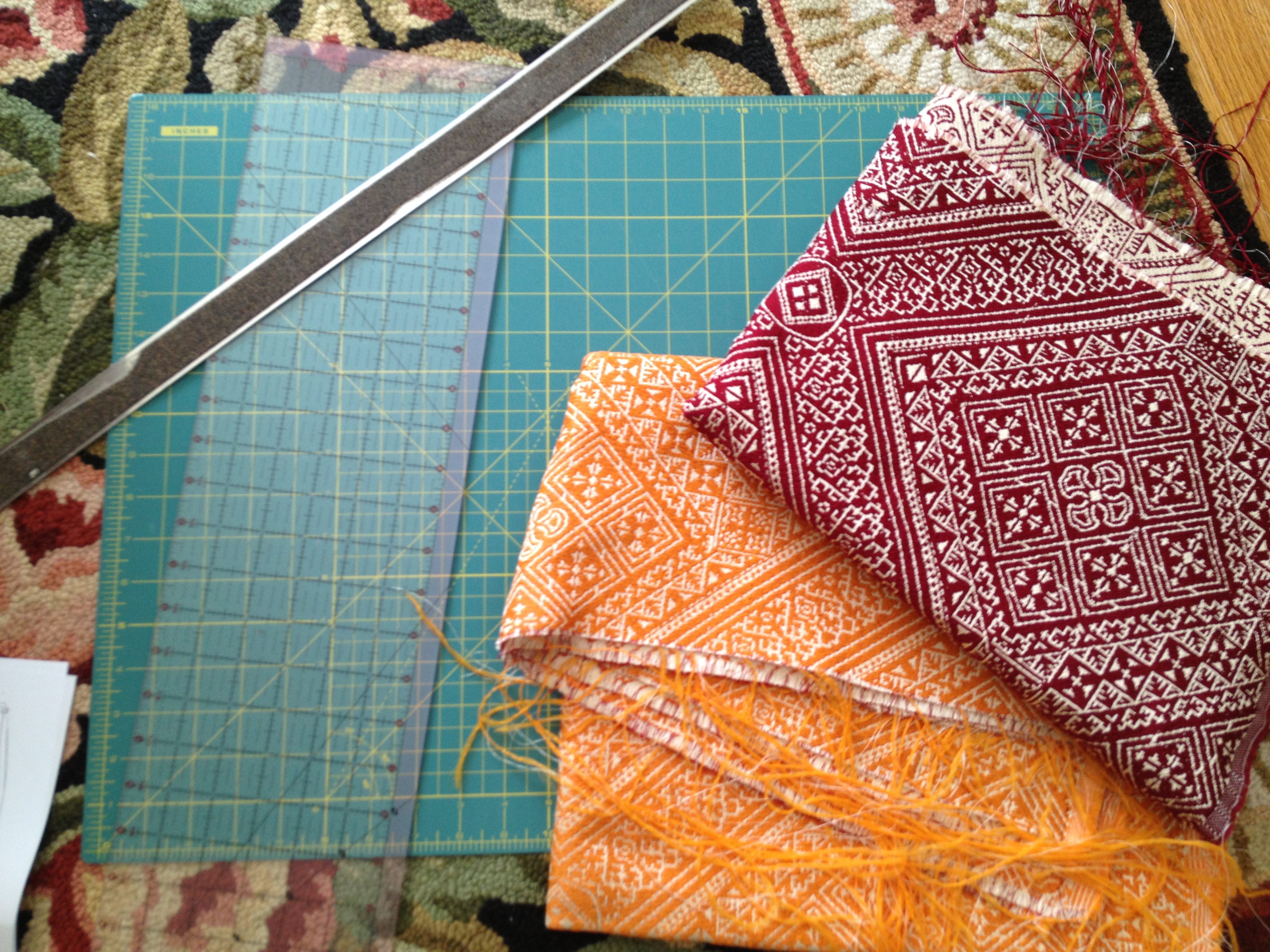
Having traveled to the cold land of the hot sun –  aka Moracco – twice now, I have found myself with several meters of fabric that are calling to be used. On my second trip to North Africa, I purposely bought a meter of a different color of the same fabric with the idea of making a quilt. With such beautiful fabric, I wanted to keep the quilt simple, so I mapped out a basic square pattern – one that could easily be used to make a t-shirt quilt.

IMG_2812

You can see the dimensions I worked with in the picture above. The squares were 11.5 x 11.5 inches, and I used a 0.5 inch seam allowance.

IMG_2509

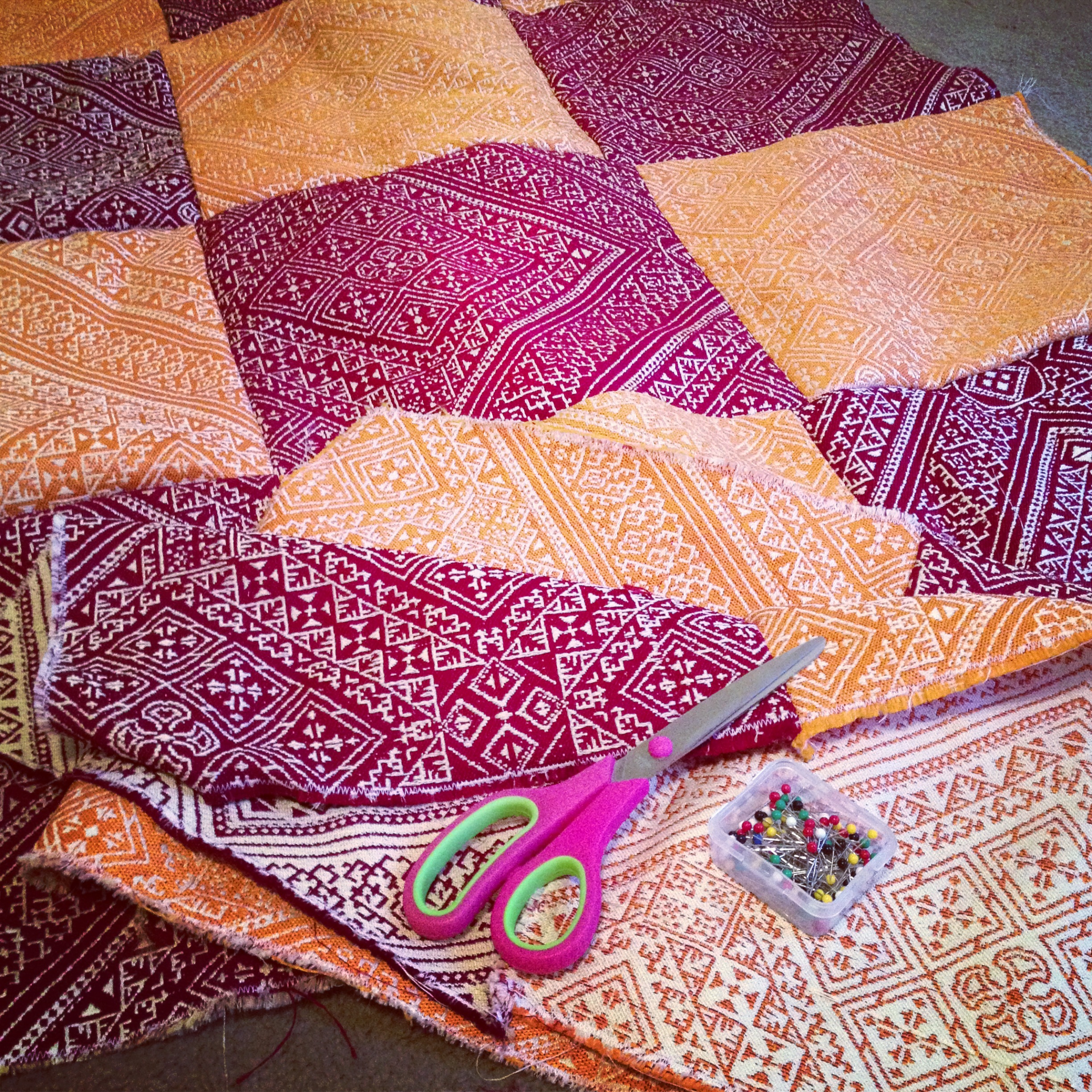
Since I was working with woven fabric, I prevented frayed edges by using the basic zigzag stitch to act like an overlocking stitch. It  was a tedious process, but completely necessary. Fabric can still fray even after you stitch the pieces together.

IMG_2801

Once I finished the edges, it was a quick process to sew all of the individual squares into the rows and then the rows into a quilt. Again, I used a 0.5 inch seam allowance throughout.

IMG_2807

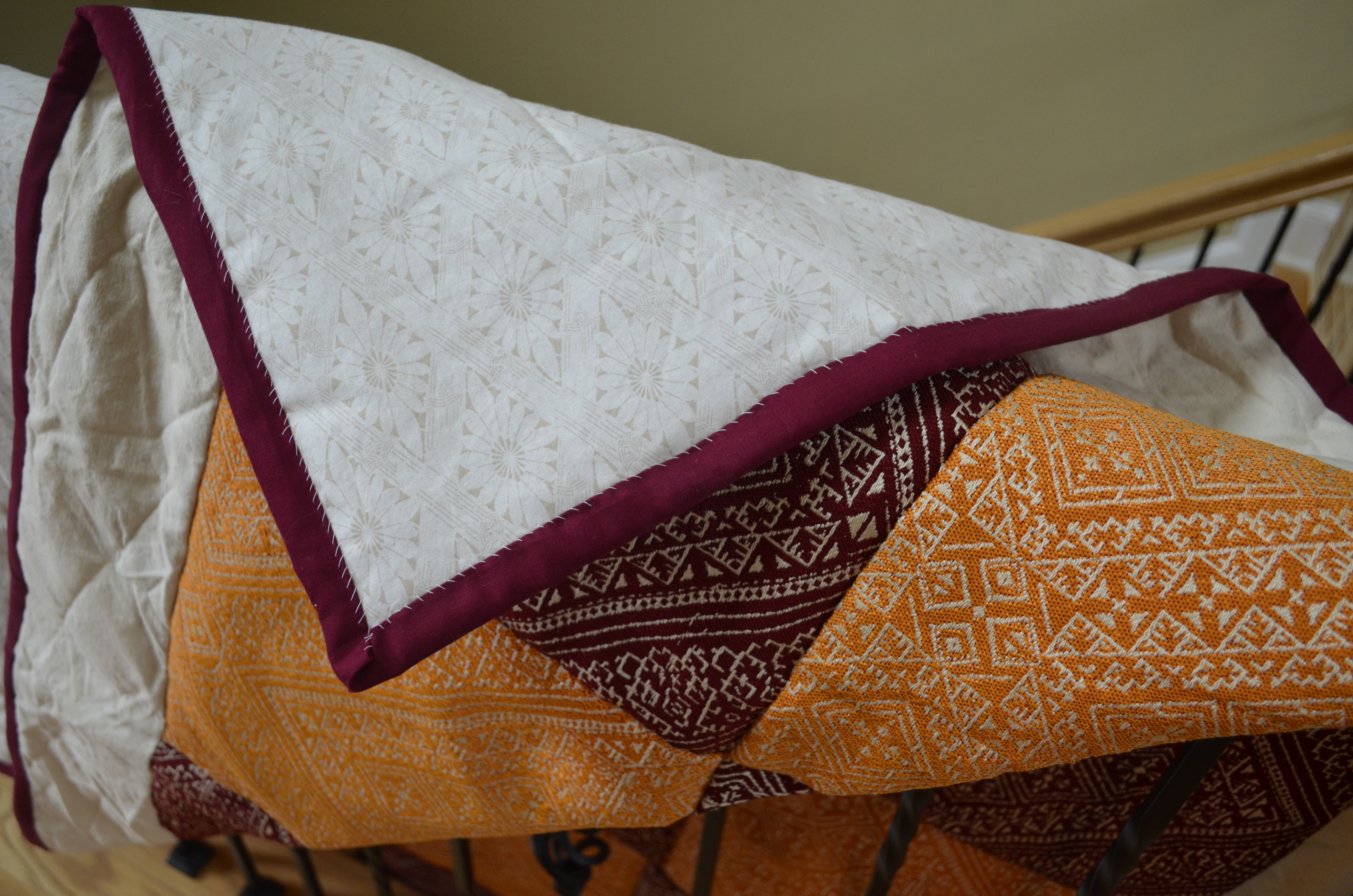
With the middle squares in place, I used a off-white canvas fabric to act as a margin of color – another simple touch to highlight the beauty of the fabric. The strips were 7 inches wide. I used the canvas fabric to match the thickness of the Morroccan fabric, but for the back fabric and binding, I used cotton. To see how I bind quilts, you can visit my previous post on the matter.

_DSC0061

I couldn’t be more happy with the finished product. It achieved the goal that I wanted – something that could show off the beautiful, hand-woven fabric as well as encapsulate my memories of purchasing the fabric on my travels. You just can’t find fabric like this here in America – well, as least not for the price that I paid for them.

_DSC0064

I found the fabric for the back side of the quilt at Handcock Fabrics, and it worked perfectly.  For the back side, I think the fabric needs to be simple enough to not trump the front, but interesting enough to add to the overall look of the quilt. This fabric did just that.

_DSC0073

This pattern is easy and simple to recreate since pieces are large, and you work with straight lines. Please feel free to ask any questions you have; I would love to help you as you work to create a quilt for yourself.

Personalized Moleskin Journal

IMG_2756

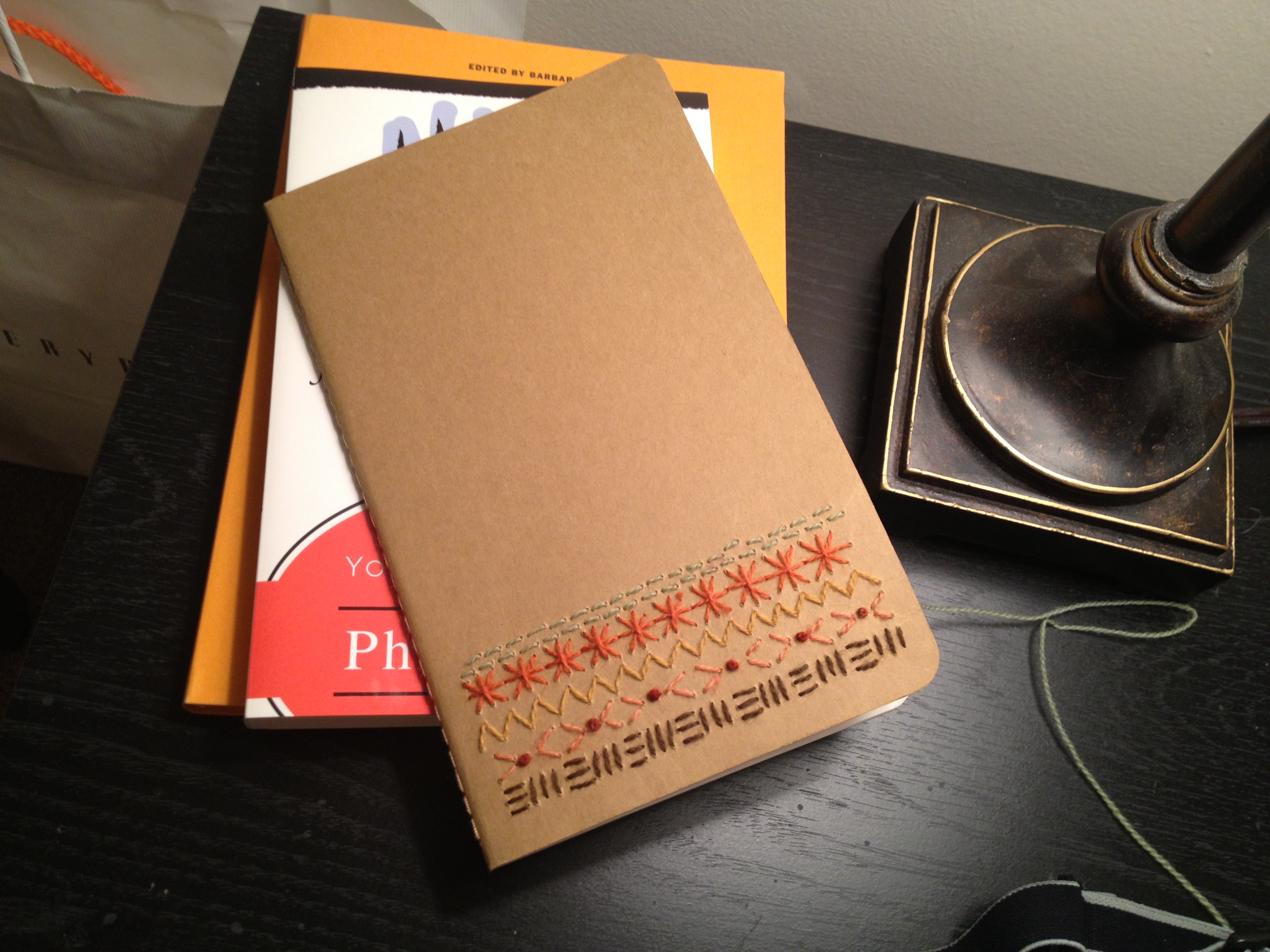
With a new job comes the need for a brand new note pad. Oh the joys! After receiving a Barnes & Noble gift card for graduation, I invested in a few Moleskins. And though I do love a good Moleskin journal, they truly are very plain. So I decided to liven them up a bit with some simple embroidery.

IMG_2745

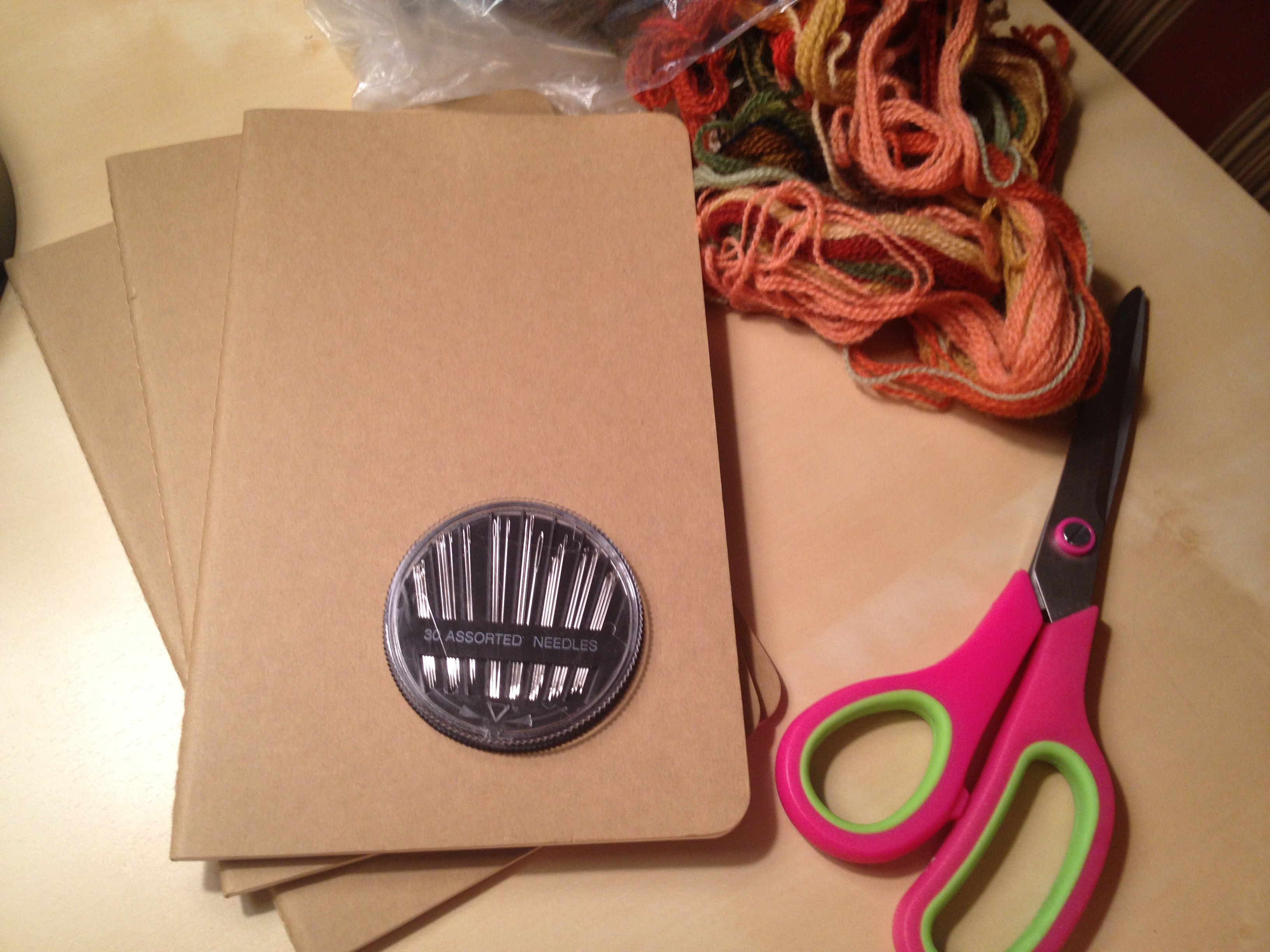
My grandmother gave me some wool embroidery floss a few years ago. Since I do not have enough to use on a major project, I like it pull it out for smaller projects like this. But the basic cotton embroidery floss works great too. Along with the thread, you’ll need the journals, embroidery needles, scissors, a ruler and a pencil.

IMG_2746

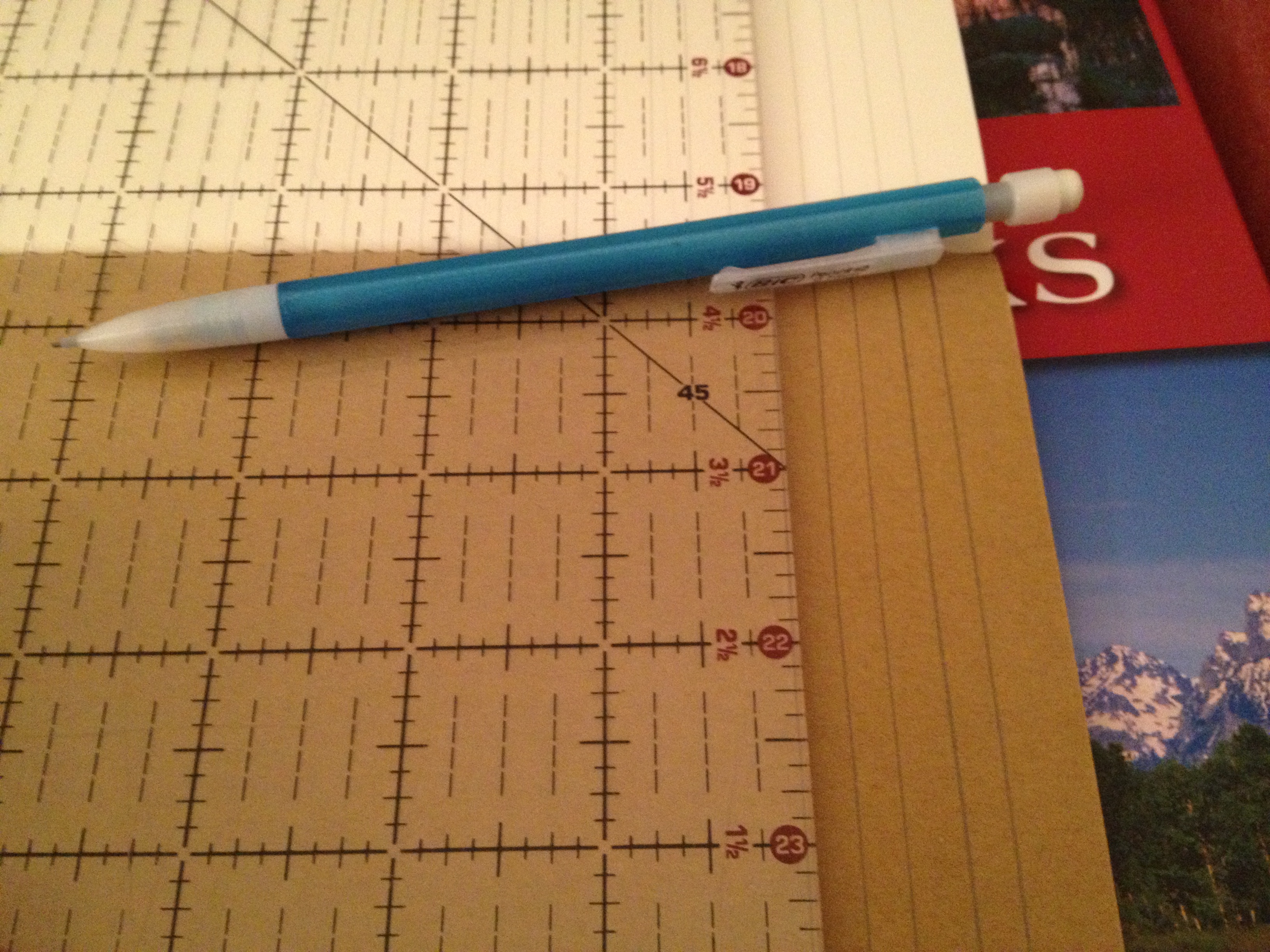
I started out by tracing a few lines on the inside front cover to act as a guide for my stitches. (It’s always important to stitch straight.)

IMG_2748

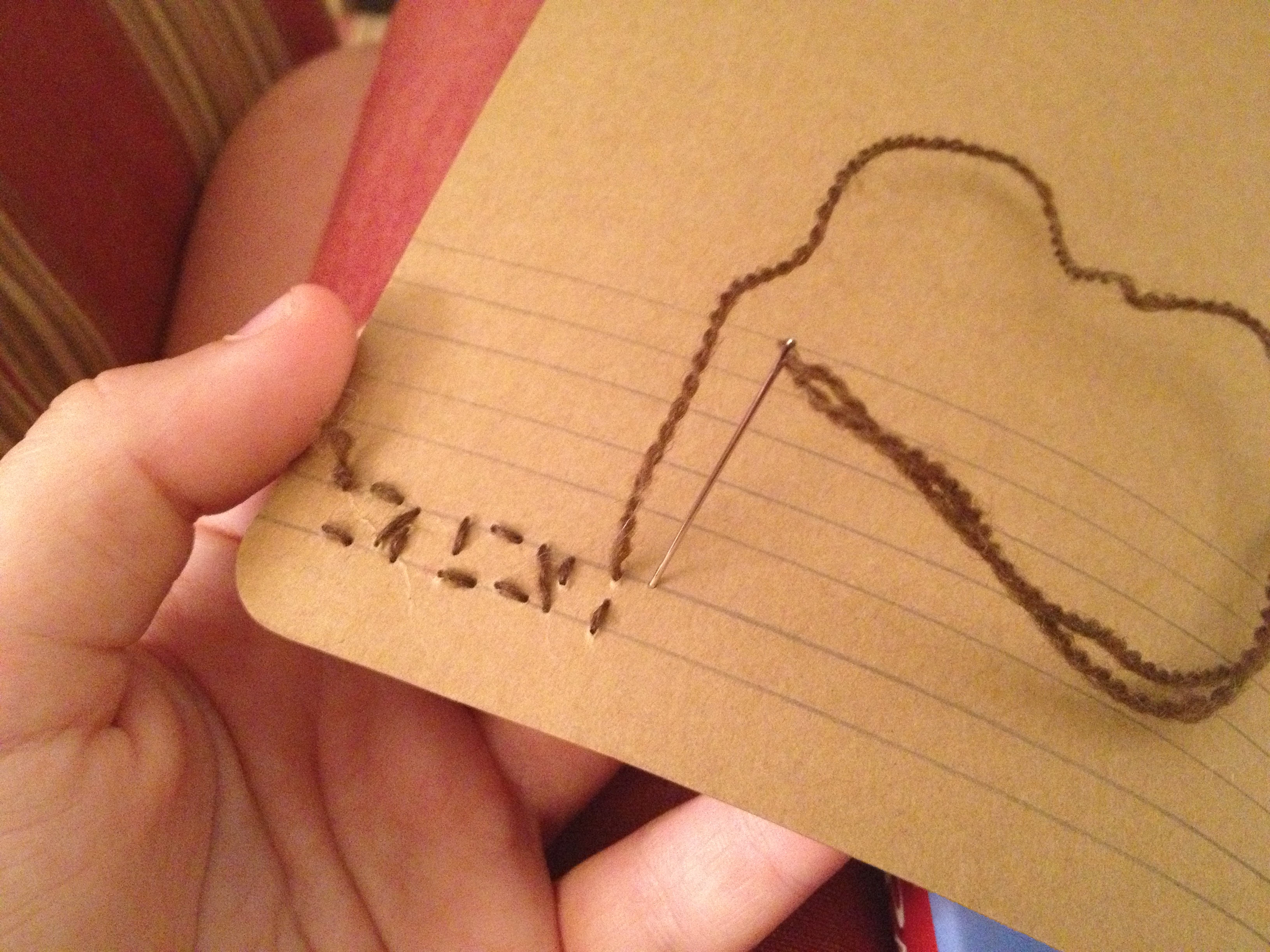
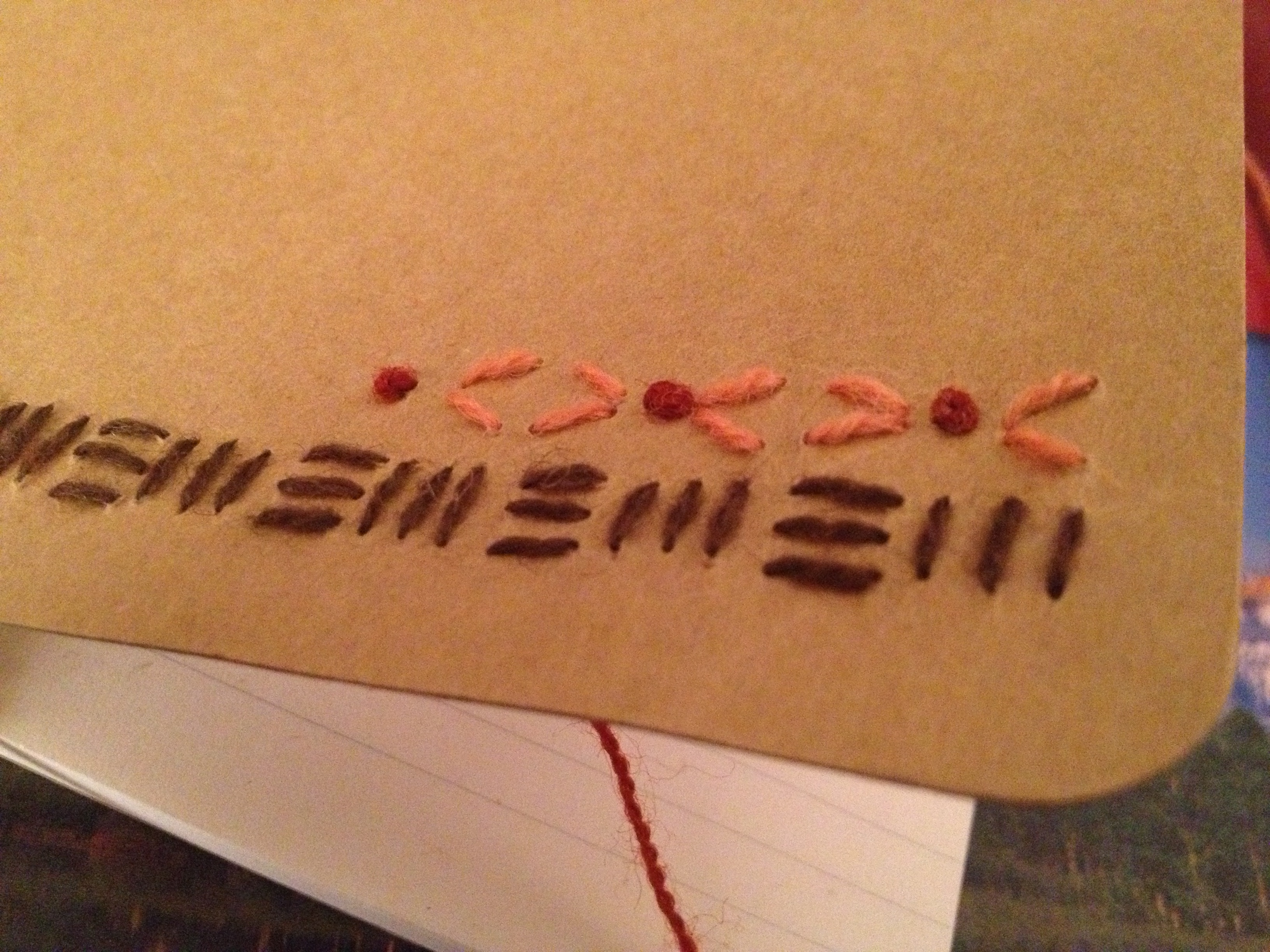
Sewing through the cover is really easy. As you can see from the picture, the stitches do reveal some strain in the cardboard, but it is only noticeable close up. Most of the stitches I used were very simple, but for one row, I used a French knot.

Creating a perfect French knot might take some practice, but it is simple to remember once you get the hang of it.

IMG_2749

Start by bringing the thread up into the space where the knot will be displayed.

IMG_2750

Next, you take the thread and wrap it around the needle. I always wrap it three times.

IMG_2751

Then, insert the needle back through the cover. Do not put it back through the original hole. But you want the second hole to be near the first.

IMG_2752

Before you pull the needle through, tighten the thread to make a knot. Then keeping the thread taunt, pull the needle through to the other side.

IMG_2755

In completely these steps, you have created a French knot.

IMG_2758Again, the other stitches are super easy because they are all straight lines. I was able to complete the project in the time it took to watch a movie. Though I took this one to work, I have a feeling I will pull this idea out again when I am in need of a good gift.

3rd Grade Art

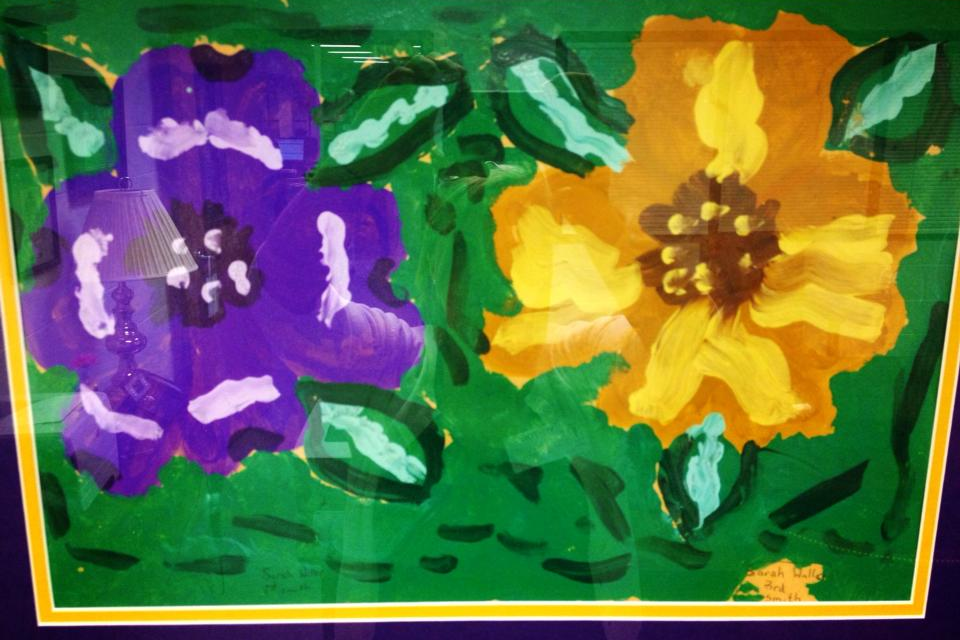
IMG_2523Thanks to the wonders of Facebook, a friend sent me a picture of a painting I made in the 3rd grade that still hangs on the walls of my elementary school. Crazy! She informs me that it decorates the walls of the school’s media center. I feel so honored.